
 I collected this Juniperus Communis in 2006 from a granite cliff, the rocks were split and I was able to collect 99% of the root that was growing in the duff between the cracks. I learnt from Peter Thali you must only collect from granite, collecting from limestone will surely lead to failure and up to this point that has always been the case. I know of only one ‘large’ Juniperus Communis that have survived from the UK. I collected a few of these amazing specimens over 25 years ago… they all died! It could be that they were planted in the wrong mixture, not enough roots, too much/little water, disease, fungus, rust… the list is endless… Juniperus Communis should only be collected if you really know what you are doing.
The tree was planted in a soil mixture I was given from my friend Pavel Slovak. It is made up of collected mountain grit that is mostly limestone and tufa, mixed with pumice. The particles are 1mm to 3mm so really quite small, it’s almost sand in texture. This is NOT normally good in the wet climate of the UK… but it has made the tree thrive! So when it comes to re-potting into the position ready to style the tree I will reuse the soil.
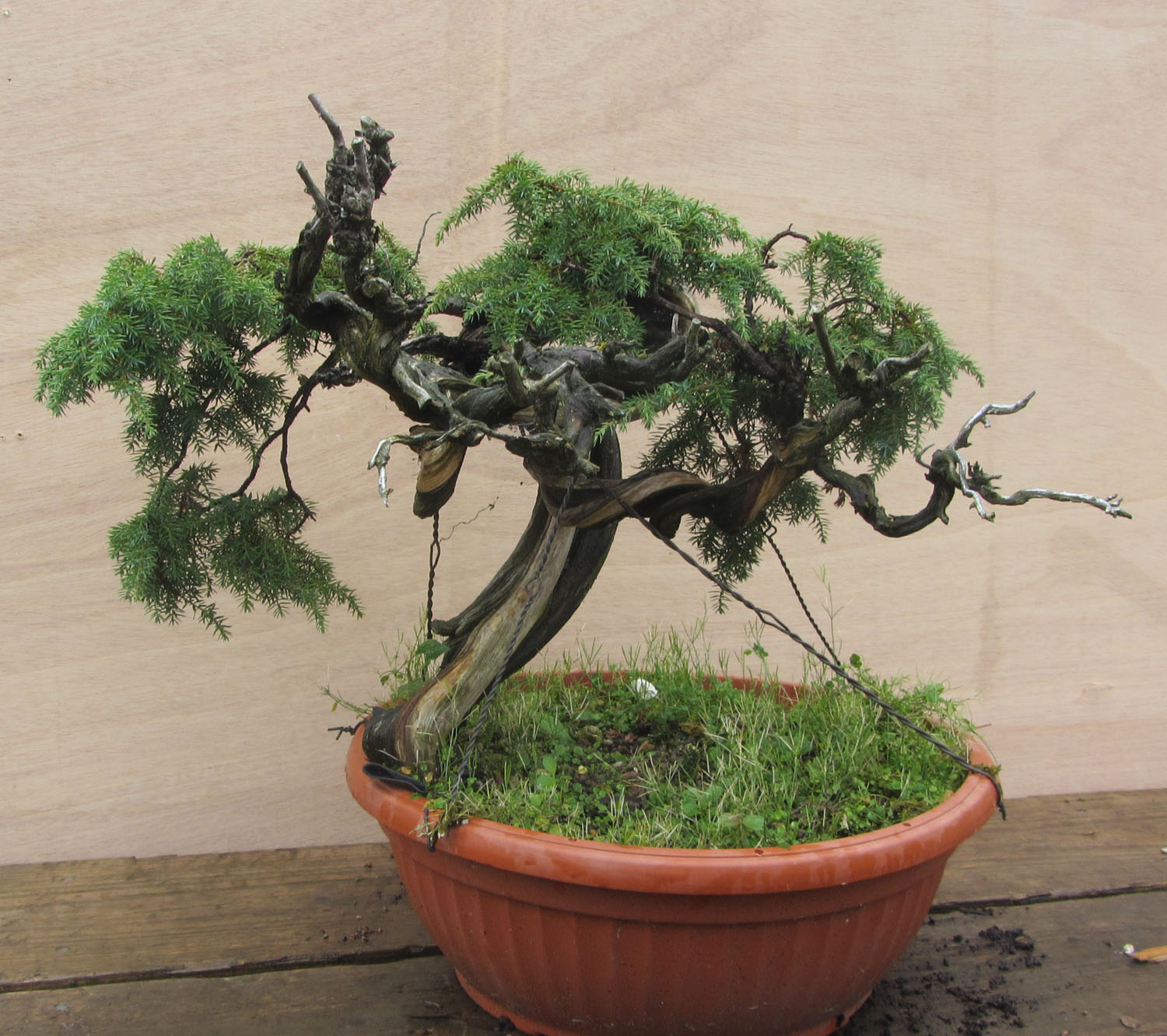
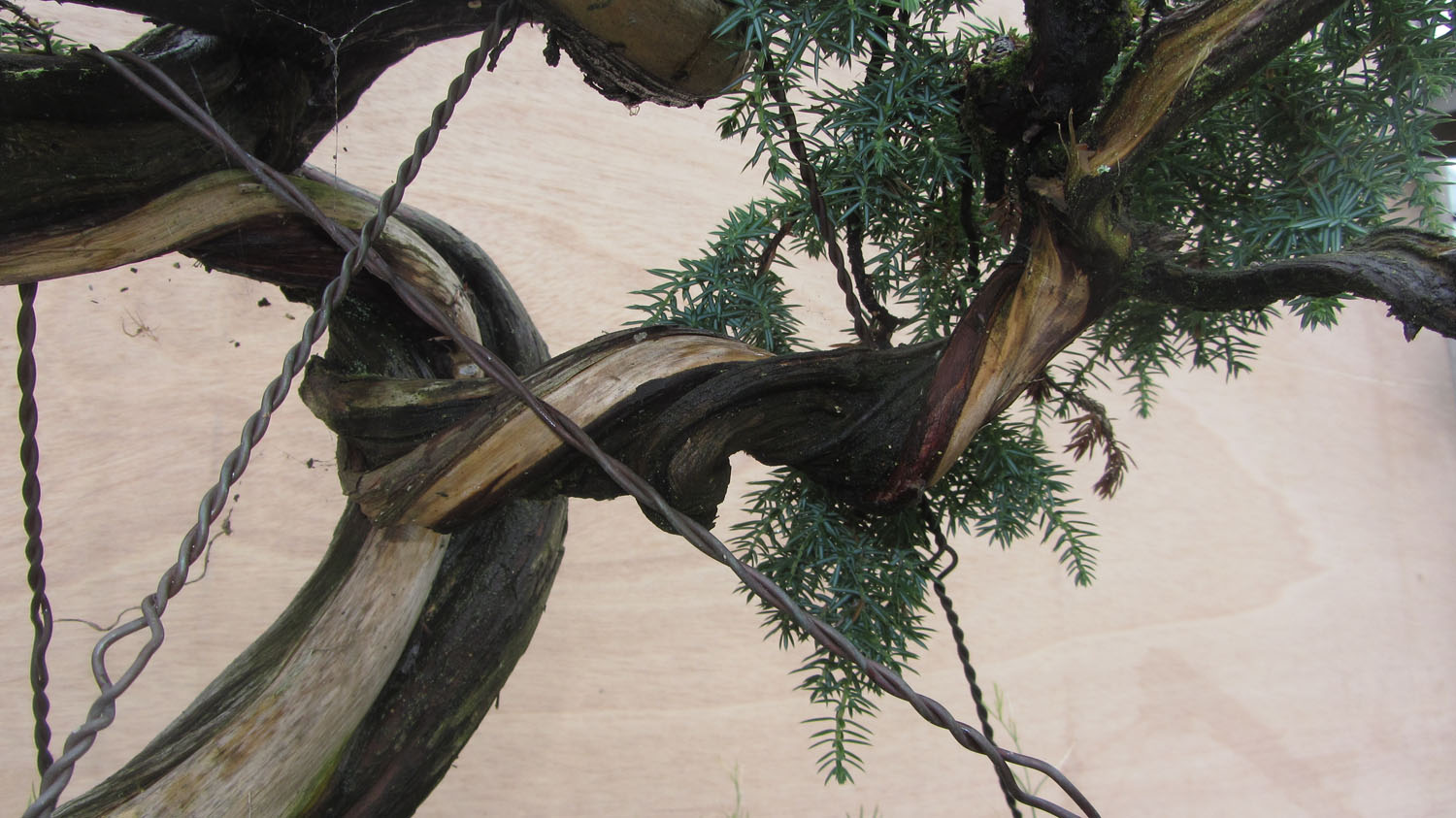 Two years ago I cleared out a lot of the growth that was a long way from the ‘action’. The trunk spirals and twists in lots of directions and there was some great growth close to the trunk. This is what you can see in the photos after two further year’s growth.
I see a very compact tree with the emphasis on showing the twisty trunk. I will use the foliage for the final tree and NOT replace with Itoigawa as is the fashion. My reason is that I love to work with our native trees, Juniperus Communis would be a great addition to my private collection. This tree is not for sale


 Bonsai & Yamadori from Tony Tickle
Great tree
LikeLike
Can you suggest anything for a new beginner like ME …. Look forward to your reply. Reside in the West Mids …
LikeLike
HI Ravi, you should go to your nearest Bonsai Club. http://www.bonsaimidlands.co.uk/
LikeLike
We’ve had the same experiences with J. Communis here in Wyoming(USA). They only survive if we collect them from Granite where we can split or pry away rocks to get a good “fine mat”/pad of roots. We’ve been able to reduce the size of the root mat when potting. But trees collected anywhere else, or without a good “mat” don’t make it.
I think the reason for bad collecting from limestone has more to do with the type of root pad you end up with at collection than the actual substrate… which is why it would grow fine in a mixture including limestone. I’d love to hear your thoughts on this?
Thanks for your post! And beautiful tree!
LikeLike
what the size about this wonderful tree tony ?
i had several disappointements with this spece, probabably because of the bad mixture and not enough roots when i had collected, i had not enough knowledge when I did it.
what a beautiful tree !
LikeLike
Hi JP the tree when put into the planting position is about 45cm tall
LikeLike
Hi Tony…
Your wording says “only collect from Granite, and not limestone as it is destined for failure”,
Yet your soils mixture is or has a mixture of Lime stone in it. Strange how these two contradict each other yet seem to work!?!
Any thoughts?
Cheers
Bryan
LikeLike
Dunno bryan that’s why I am surprised, you can take a closer look in November
LikeLike
For sure…!!
If you need any styling tips, I’m happy to help 😉
LikeLike
Once the common Juniper is established in the pot, how does one go about repotting it? How much roots may be pruned? How much substrate may be removed (and later replaced)? At which time of year should repotting be done? Can the tree be (branch-) pruned before repotting t.i. how much time should pass between branch pruning and repotting? What after care the tree needs after repotting? In one sentence: how to repot a common Juniper and keep it alive?
LikeLike
Mark… so many questions, I feel another post coming on…watch this space
LikeLike
What a tree! Some amazing movement there Tony!
LikeLike
thanks chuck 🙂
LikeLike