
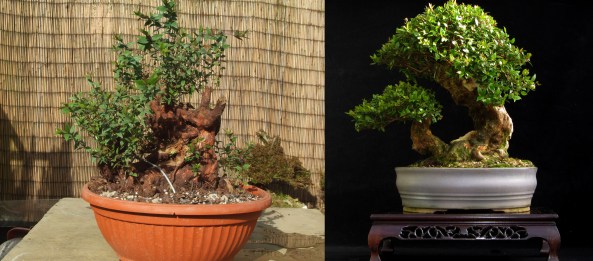
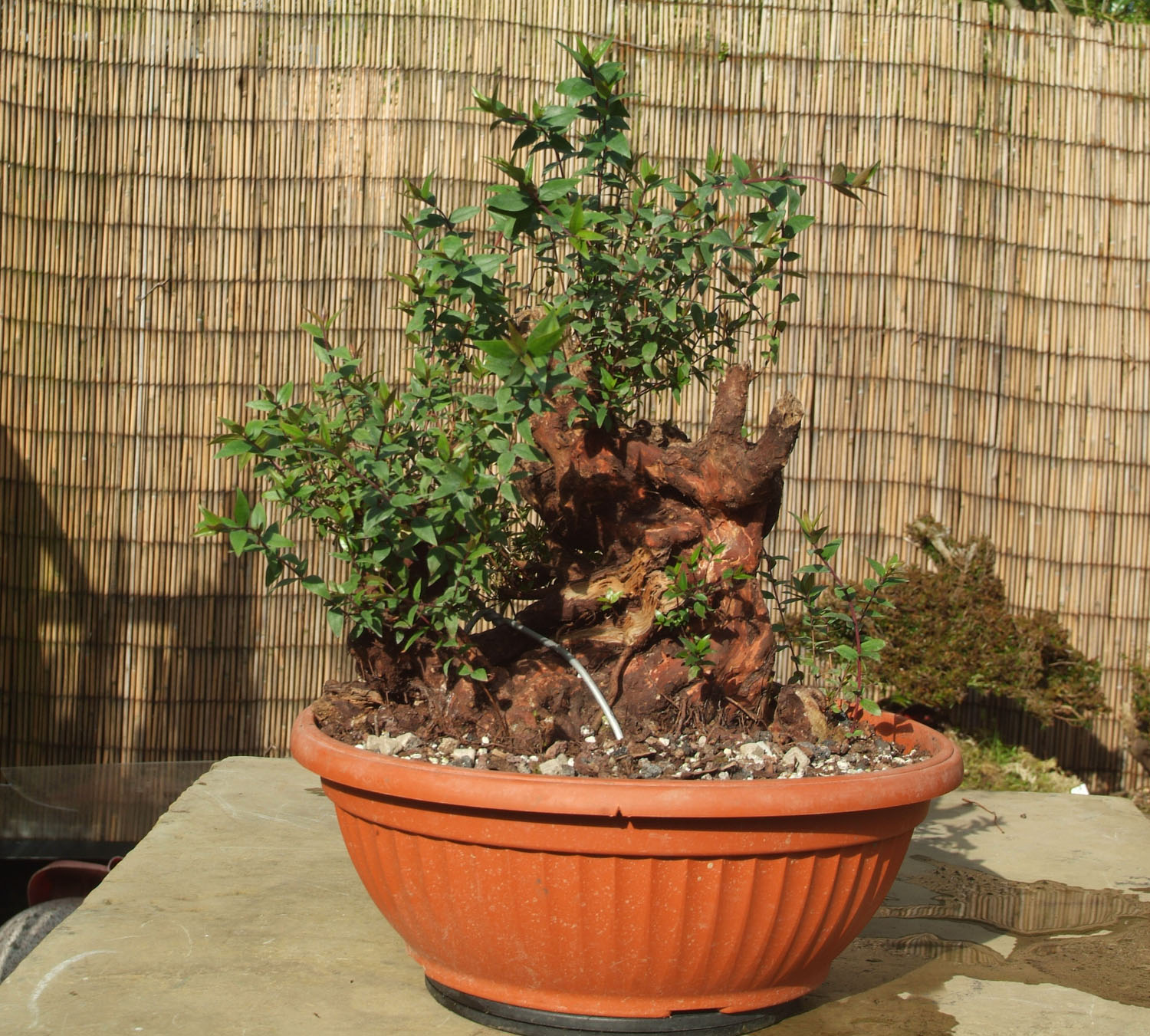
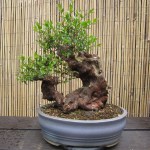
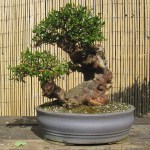
 It seemed like an opportunity too good to miss, an old tree with a wonderful trunk that could eventually be a great ‘mother and child’ bonsai, and the price was not expensive, problem was it was a Myrtle Communis. It came from a Mediterranean climate that was sunny, warm and dry for most of the year, I live in the North of England where it is cloudy, wet and cold for most of the year. The previous year I had experimented with a Majorcan Olive from Angel Mota and against all odds it actually did quite well. Should I part with my hard earned cash? Should I risk working with material that (as far as I knew) nobody in the UK had worked before? Should I take a risk? Three years later and the results speak for themselves.
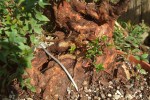
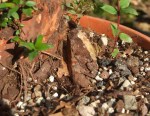
The tree was purchased in the spring of 2009 as a stump with very little growth; it was potted in a VERY open mixture of pumice and bark. When I took a closer look at the base of the tree I noticed that there was a random ‘trunk’ growing across the space between the two main trunks. I pulled this out and planted it in a plant pot; it thrived and is now a sweet Shohin Bonsai in its own right. The base of the tree also had a very severe chain saw cut through the nebari (I guess this was the reason the tree was not expensive)
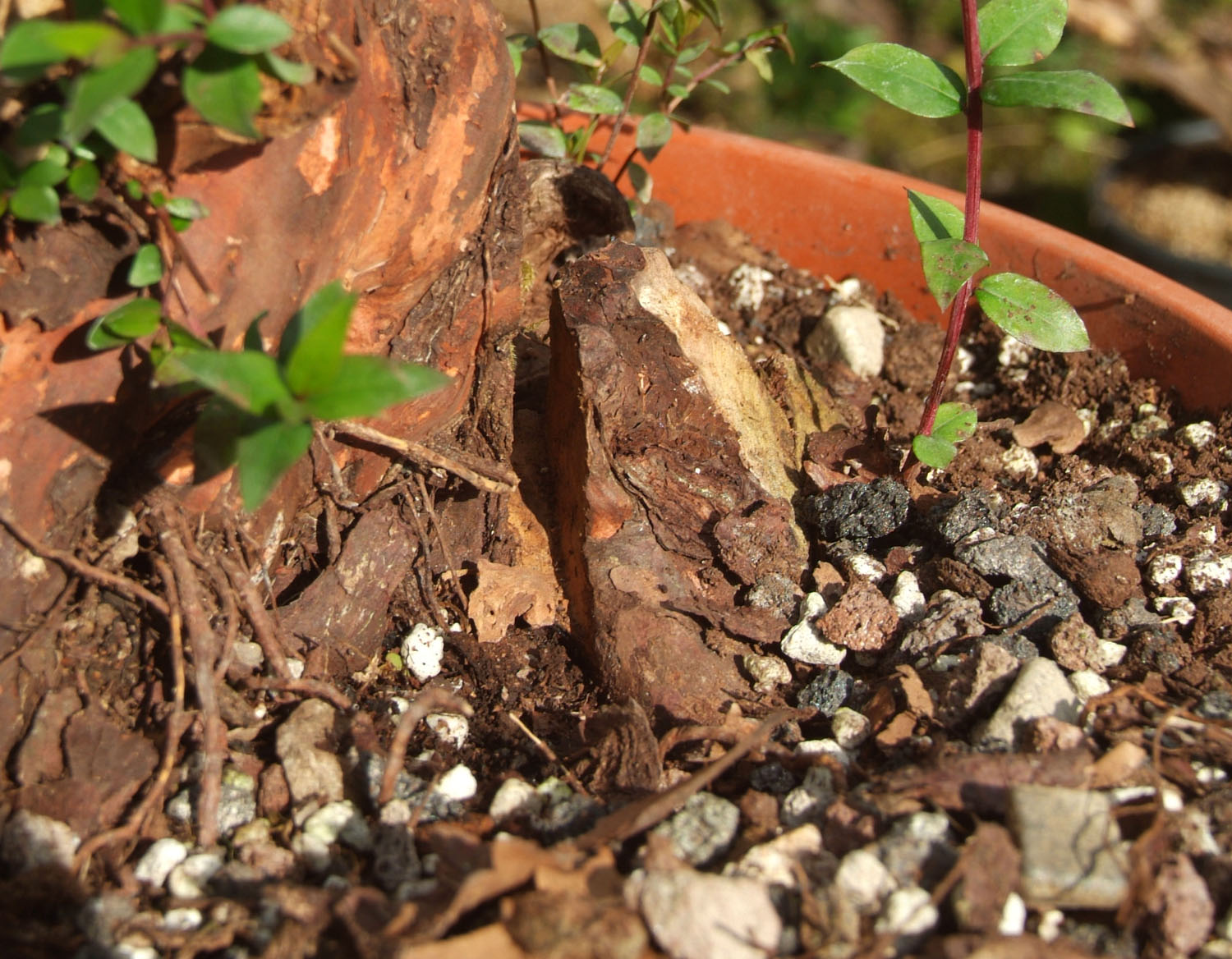 I needed to investigate the nebari and roots to see if I could rescue the situation of the saw cut, and repot in a mixture more suitable to my climate.
Once removed from the plastic container I discovered a much larger base and far fewer roots than expected, however the tree seemed healthy enough. I carved out the BIG cut and created a ‘deadwood’ area that would finally form part of the nebari. I also removed stumps around the top of the tree and created a ‘natural’ looking taper. At this stage the main concern was health, the creation of mature branches and the development of good ramification.
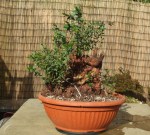
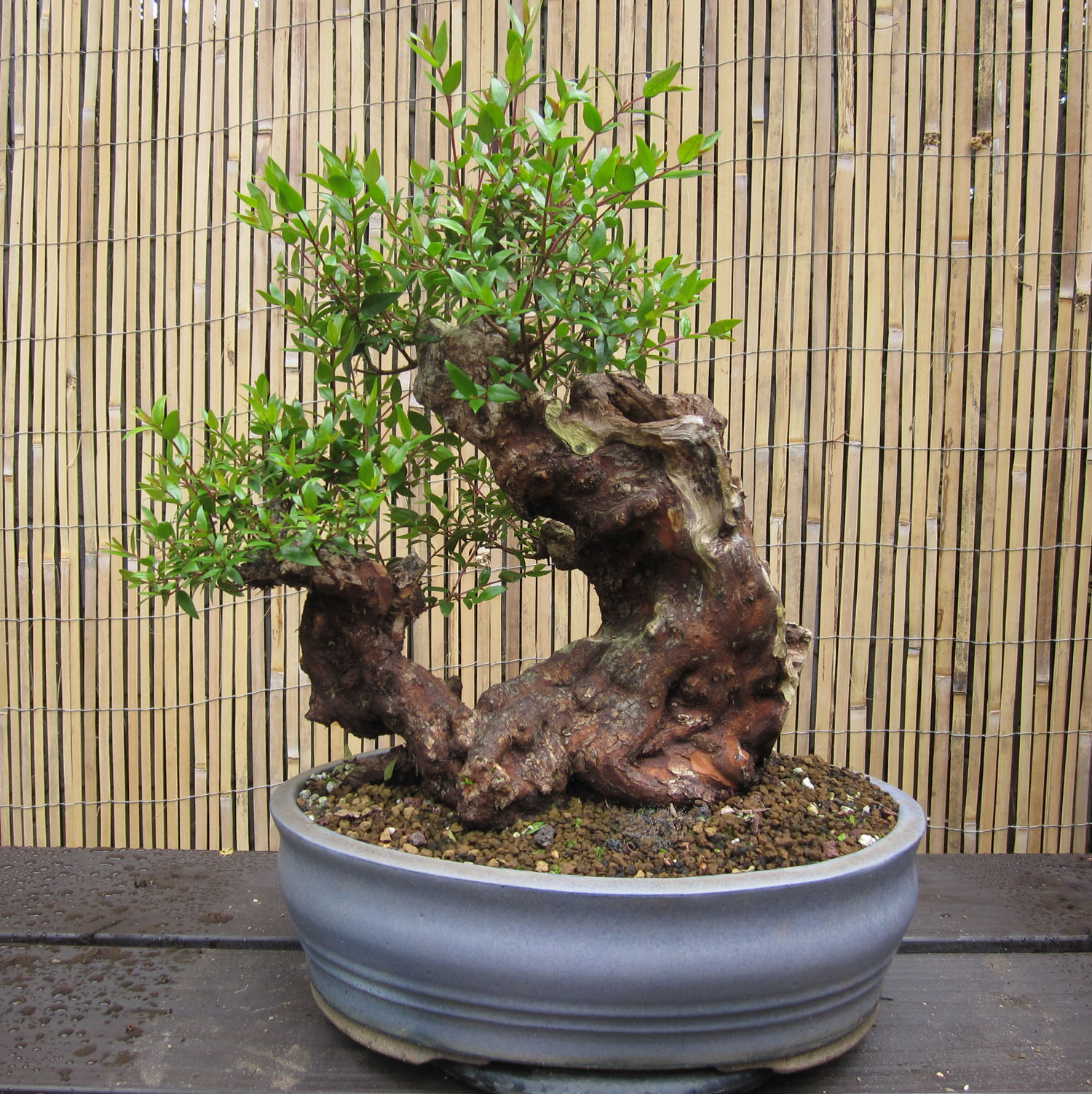 The tree was left to grow untouched by wire but pinched back to two leaves throughout the growing season, that being from May to December. The growth proved to be quite dramatic this was due to a lot of feeding and keeping the tree in the glass house for 9 months of the year, only moving to the open garden during the warmer summer months. This year in the UK has been the wettest on record and the glass house has been my saviour for many trees.
After the first year I wired the main branches and created a crown for both trunks and the last two years this has been the task. Constant vigilance ensuring that the ramification is correctly maintained, pinching out long growth, keeping the shape in check and creating a pleasing silhouette.
I doubt whether that I will ever have a hot summer long enough to force the tree to flower and even fruit, this being one of the best features in Myrtle. Maybe I let the tree have a holiday at my good friend Enrico Savini and his garden in Bologna.












 Bonsai & Yamadori from Tony Tickle