Earlier this week I took a friend from Italy Andrea Meriggioli to some of my special places where the most amazing trees grow. He was surprised that these incredible trees were in the UK. Especially the BIG deadwood Yew.

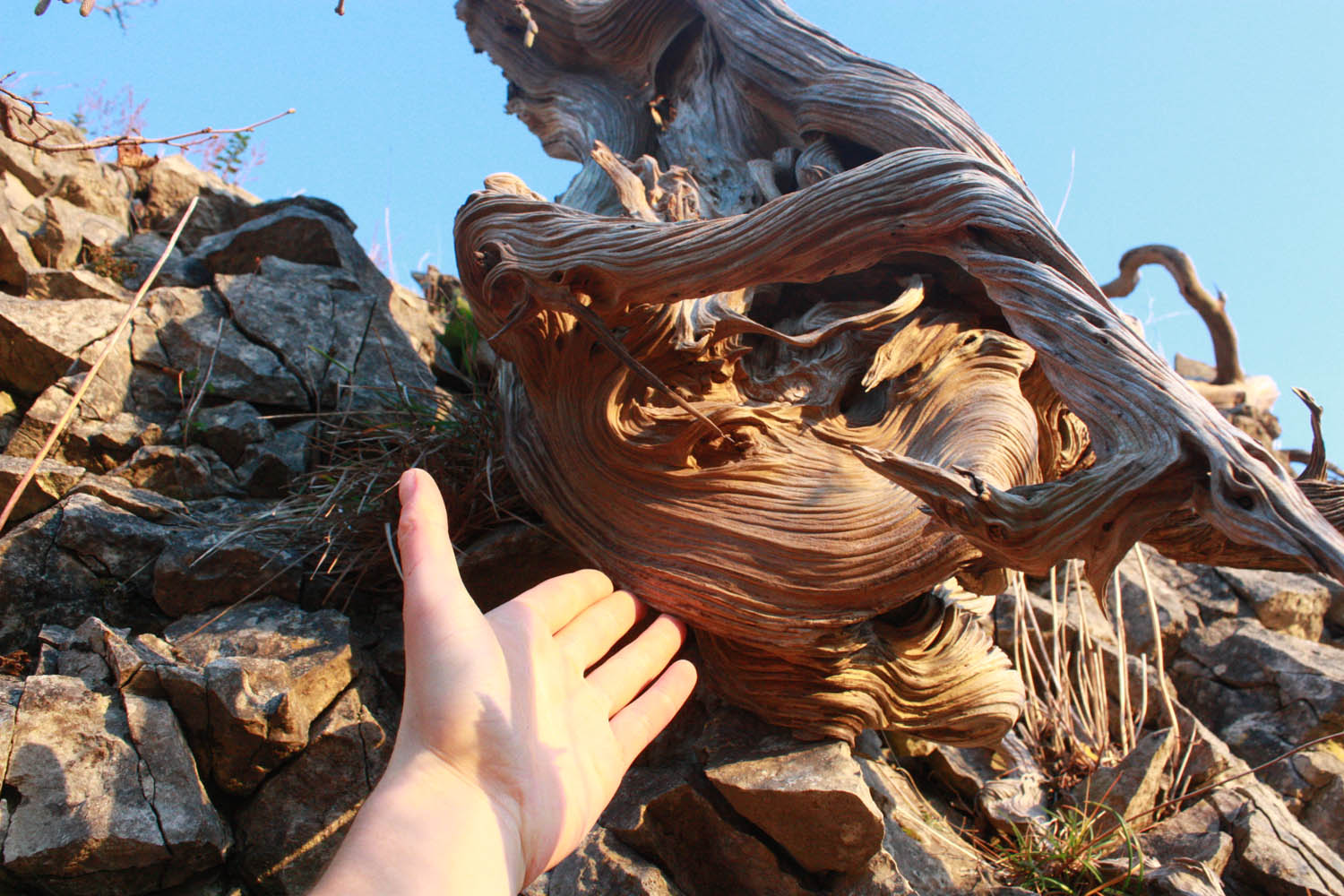


Earlier this week I took a friend from Italy Andrea Meriggioli to some of my special places where the most amazing trees grow. He was surprised that these incredible trees were in the UK. Especially the BIG deadwood Yew.
Today I did the progressive styling on the Tall Yew. The tree is now well established in the pot and has a strong root system that’s developing sturdy branches and a lot of foliage. With the help of a hot summer and careful feeding regime the tree is growing well.

The Progressive styling
I removed about 30% of the foliage, and wired the rest. I grew a branch at the rear of the tree and replaced the previous one on the lower right because it was brought down from the crown and I was not happy with the structure. This branch now needs to thicken and ramify, the branches are left uncut to grow long, and these will be cut back at the end of the growing season. The lower left branch is well underway and has been cut back to a few needles. Where I want back budding I have removed the inner needles on three year old wood
Due to the vigorous growth the wire will be removed next Autumn just prior to the branches thickening, this growth has also helped the thickening of the live vein.
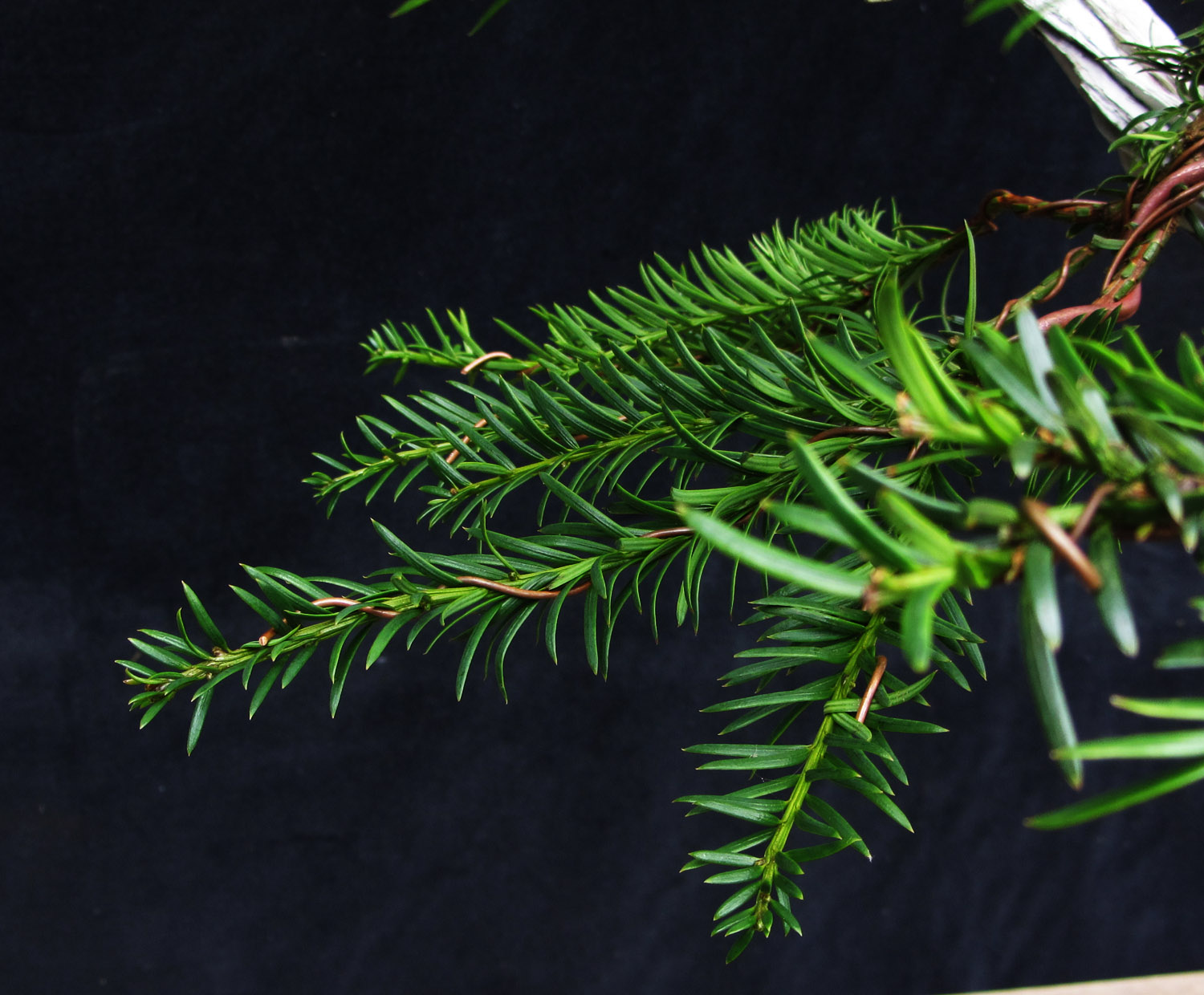
Branches left to grow to thicken
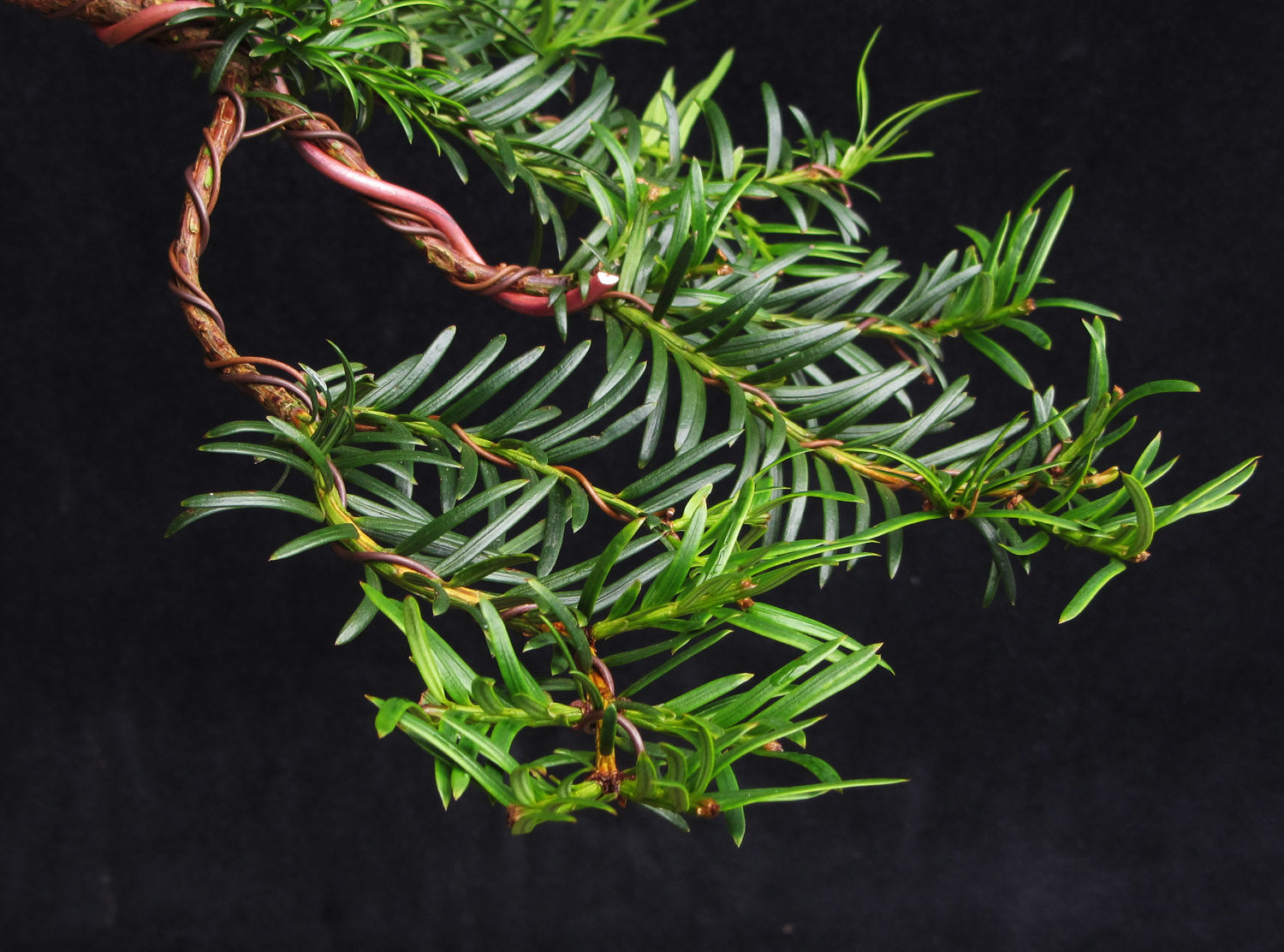
Branches trimmed to force ramification

Inner needles removed to encourage back budding
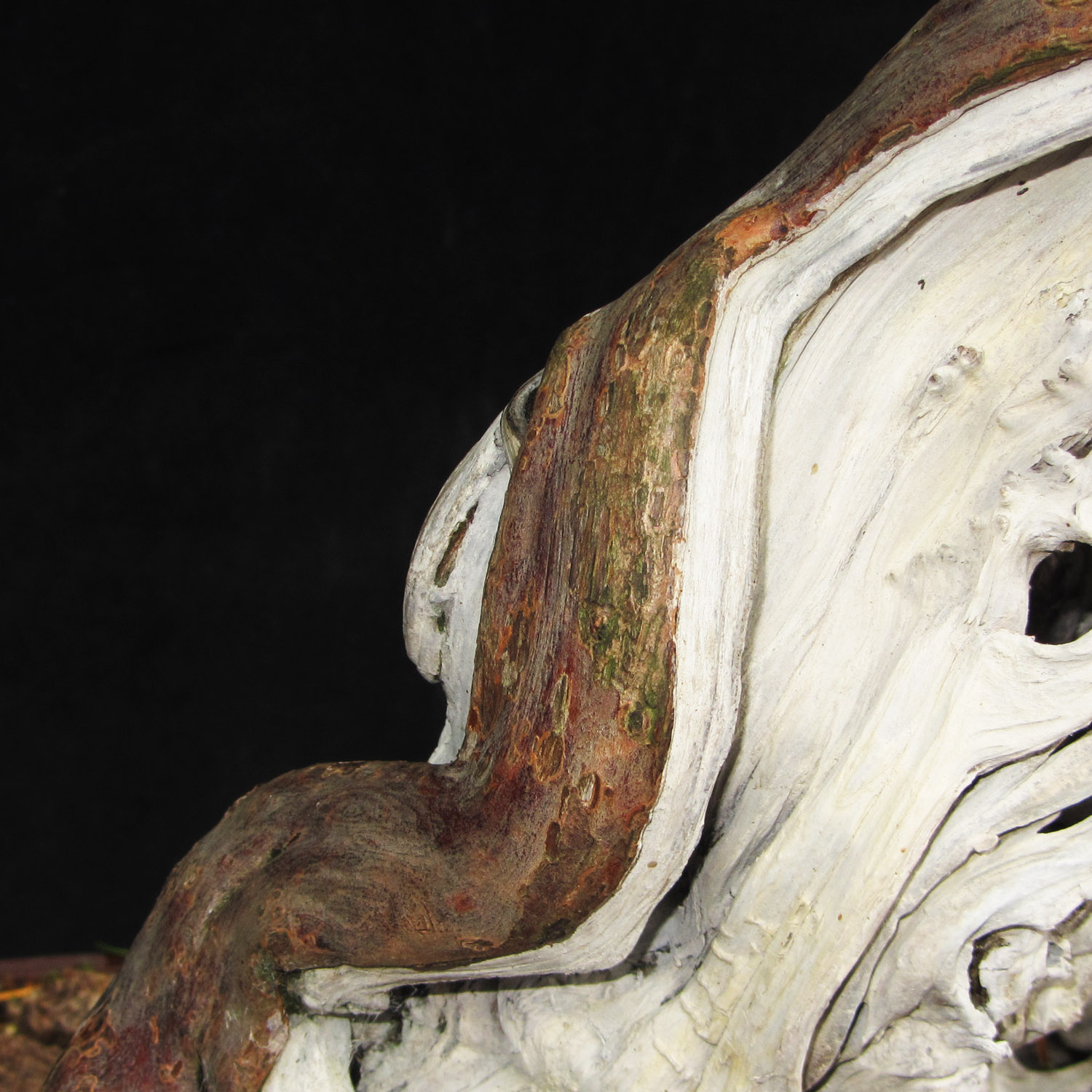
Thickening of the live Vein
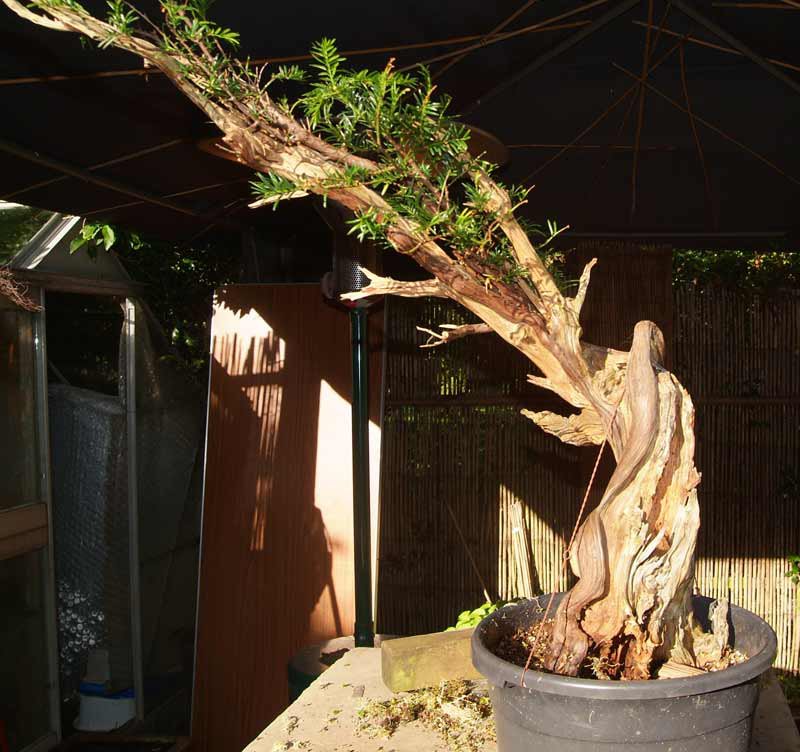
When the tree was collected in 2007
Earlier this month I made a pilgrimage to Borrowdale in the Lake District, a beautiful area and home to some of the most amazing trees in the UK. I went in search of some amazing ancient Yew trees, described by the Poet Wordsworth as ‘the Fraternal Four’ – though there are now only three.

“But worthier still of note
Are those fraternal Four of Borrowdale,
Joined in one solemn and capacious grove;
Huge trunks! -and each particular trunk a growth
Of intertwisted fibres serpentine
Up-coiling, and inveterately convolved, –
Nor uninformed with Fantasy, and looks
That threaten the profane;”
It is hard to believe that these three trees are not signposted, despite one of the trees being named by the Tree Council and selected as one of the 50 Great British Trees recognised to celebrate the Queen’s Golden Jubilee in 2002. Difficult to find the only ‘threat’ to these trees being the 140 inches of rainfall and the harsh growing conditions. I took with me a superb account from Toby Hindson (you can download it here) who in 2012 recorded in detail the condition of the remaining trees.
 We arrived in the Borrowdale valley armed with our directions yet still found them difficult to locate, I called to a group of walkers across a field of grazing sheep “are you searching for the Yews?” not realising that they probably thought “Ewes”… Carolyn was in hysterics.
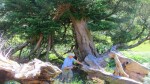
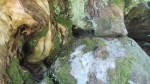
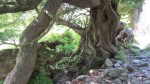
After consulting the OS map we identified the location and set off alongside a dry river bed, the hillside was deep with ferns and dry as tinder. The route up the Trees is over granite Talus and they are growing on and between the large stones, the largest tree growing over a large rounded boulder.
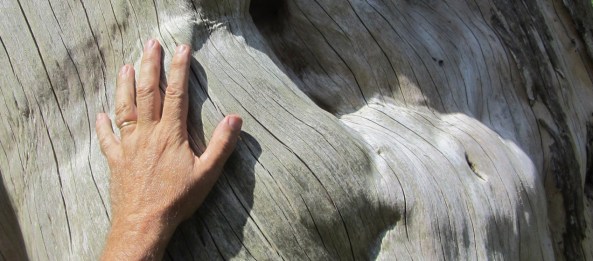
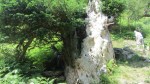
 The three trees grow close to each other and create a strange mystical atmosphere under the canopy. I had an amazing feeling of euphoria during the whole time I was among the ancients, my friends simply could not believe that they were stood in visible history, they too were entranced. In 2005 the crown of the oldest tree literally ‘snapped’ off. It lies alongside the bulk of the tree as a white skeleton. The deadwood on the main tree is something to behold, bleached white by the sun it’s a great model for bonsai. All the trees are hollow the oldest is so large that 6 persons can easily stand inside, the other two trees display copious deadwood that is not bleached white but rotting brown. All have low hanging branches that are regenerating.
In the book “The Sacred Yew” Alan Meredith considered these trees to be Neolithic, the National Trust approximately 2500 I am with Meredith, these trees are ancient. From my own experience and visits to many old and ancient Yews in the UK including the Fortigall Yew at Glen Lyon, these trees may well be over 5000 years old.
Next time you venture into the Lake District take the time to visit The ancients, you will not be disappointed.



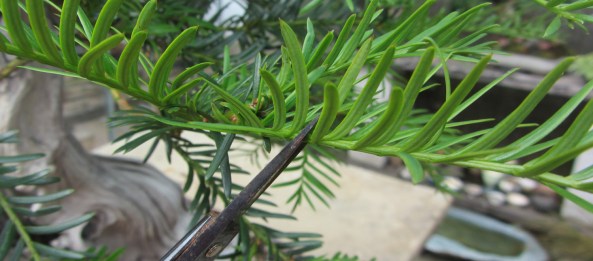
It is important to know when to cut back and create good ramification. Planning the structure of your tree is critical in the early stages, even though the silhouette of the tree may look luscious and full, the structure and therefore the future quality of the tree will be compromised. The ‘pig tailing’ long branches and trimming the outline of the tree is a practice that must be stopped if our bonsai are to reach a high level.
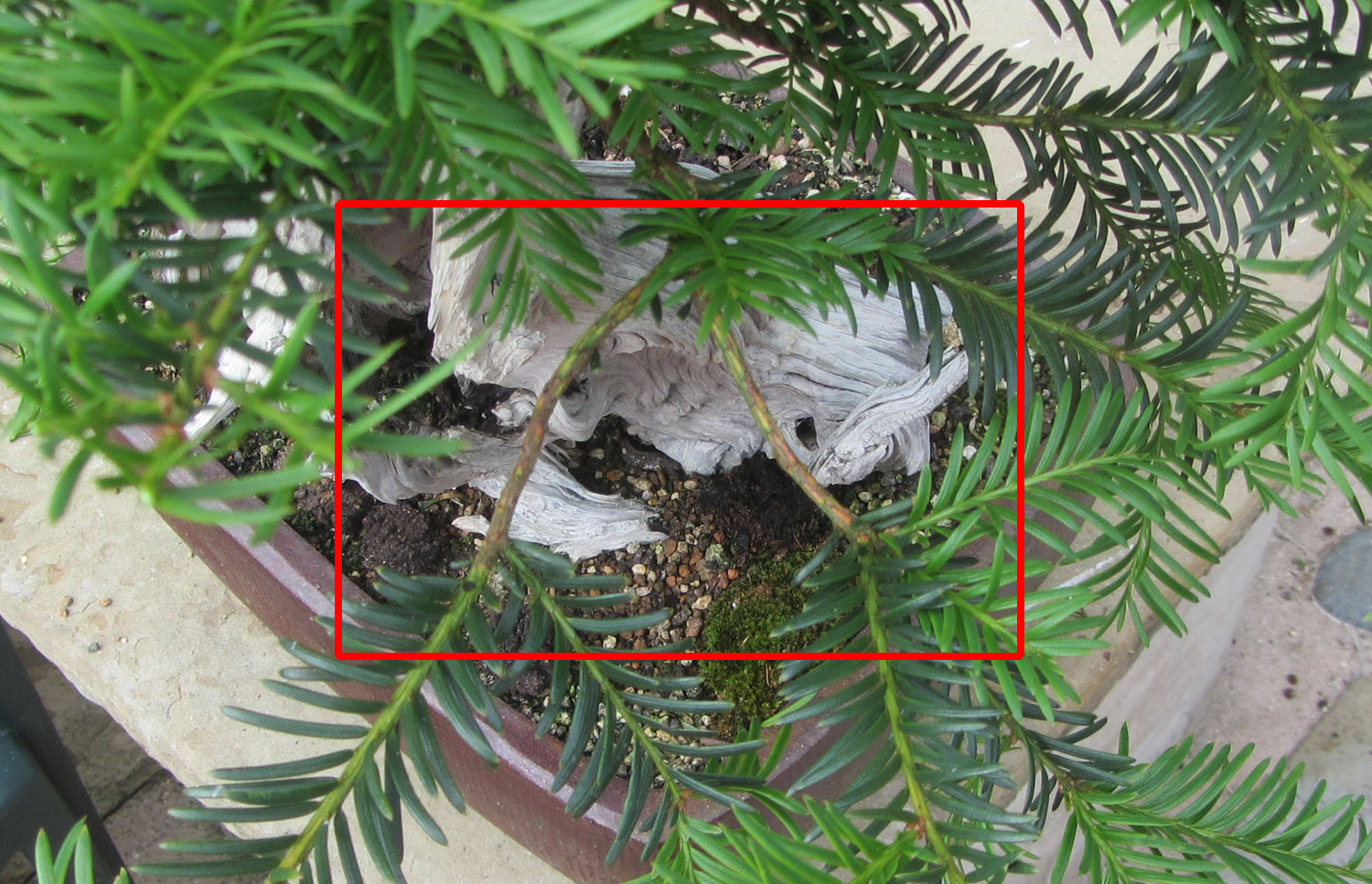 Back budding is created on ‘third’ year growth, in 2013 this means that branches that were grown in 2011, so in the early stages of creating the foliage ‘clouds’ you are working on three year cycles.
If you cut back too early the strength of the tree is weakened, the best time is when the new growth is approx 5 inches or approx 20cm long, trim back to between 12 and 20 needles. This growth will have thickened the branch and stimulated good root growth, and trimming in July ensures that there is enough time for the tree to make new buds both on the trimmed area and further back down the branch.
To encourage new back budding pluck the needles on the third year’s growth, this will throw out masses of strong new growth before Autumn ready for the following year.



I am pleased to say that my new feeding regime is working well with the growth on this yew, these photos were taken one year apart. I will be cutting back next month to encourage internal growth and in couple of years this tree can be styled.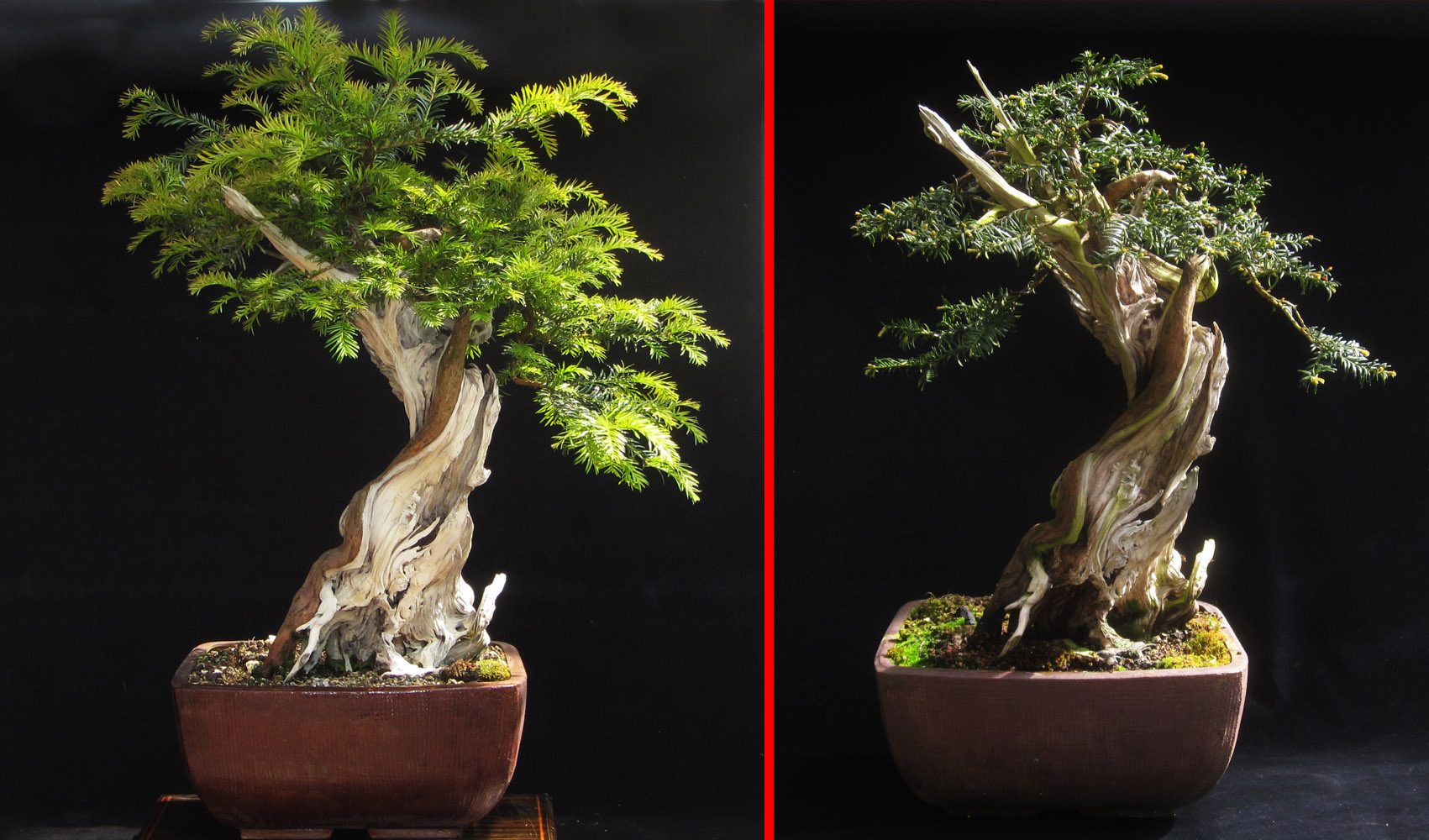
My Life in Bonsai and Ancient trees
Design and Build Japanese Gardens
Keeping you up to date on the Paris2024 Olympic canoe slalom and kayak cross
Conifers are great
Providing food packs for the needy
This is a blog that blossomed out of a love of finding and sharing new music, and is dedicated to introducing up and coming musicians and bands from all over the world.
Fun things I see and do in my bonsai life.
Art and Adventure - Collecting Rocky Mountain Yamadori
Welcome To My Bonsai World!
www.sogetsu.it
small goods packaged big
"Tibolar-RS. your soil needs it, your plants will love it"
Developing bonsai trees from scratch
“The world is a book and those who do not travel read only one page.”
Macetas de autor para bonsai shitakusa y kusamono
My on-line Bonsai Diary
Where to start. Where to go.
 Bonsai & Yamadori from Tony Tickle