Bending a twisty Yew to improve the trunk line

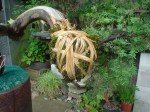
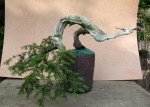
I have had this Yew for over 20 years and it has had major bending done on the lower part to bring the foliage closer to the trunk, this took 3 years to fully ‘set’ and stay in position. The tree was exhibited last year on a pile of book at the Noelanders Trophy and most liked the display and a few traditionalists were horrified. Over the years the tree has been in a variety of pots some crazy… and some not. This is because the tree has been like a petulant child, difficult making the tree do what I want. And finding the best pot has been a challenge.

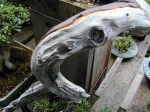
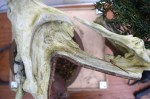
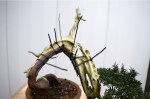
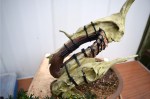
I have always had issue with the distance of the foliage in relation to the trunk line, combined with the lower trunks movement has never fully been utilized. Having done such extensive carving to reduce the bulk of the upper part the live vein was thinned to a flat part at the rear of the tree. With a bit more carving to thin out the deadwood bending this area would be a simple process. This would pull the tree together and solve a lot of the awkward shapes and angles in the tree. The wire was held in place with cable ties and the tree was bent through and angle of 30º I did not wrap the tree with raffia because the bend was so subtle and the wires and ties held the whole together well.

Calligrapher_0012

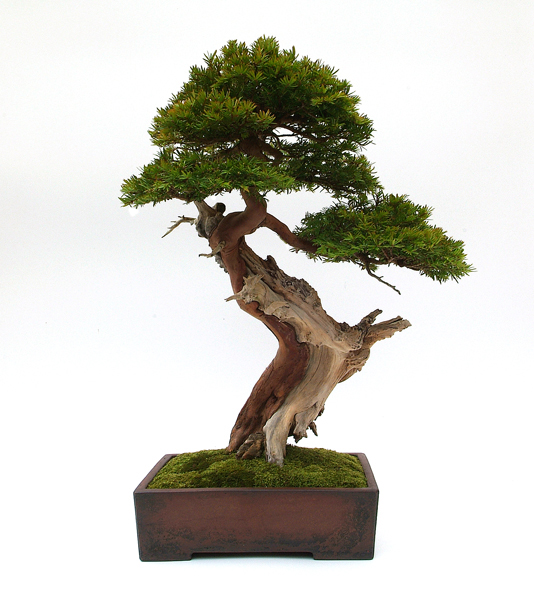
I am very happy with the final dynamic appearance; I love the angle of the Ten Jin, the movement of the lower trunk and the compact nature of the whole image. The training pot will help the tree thicken up the live vein and meanwhile I can concentrate on filling out the foliage.

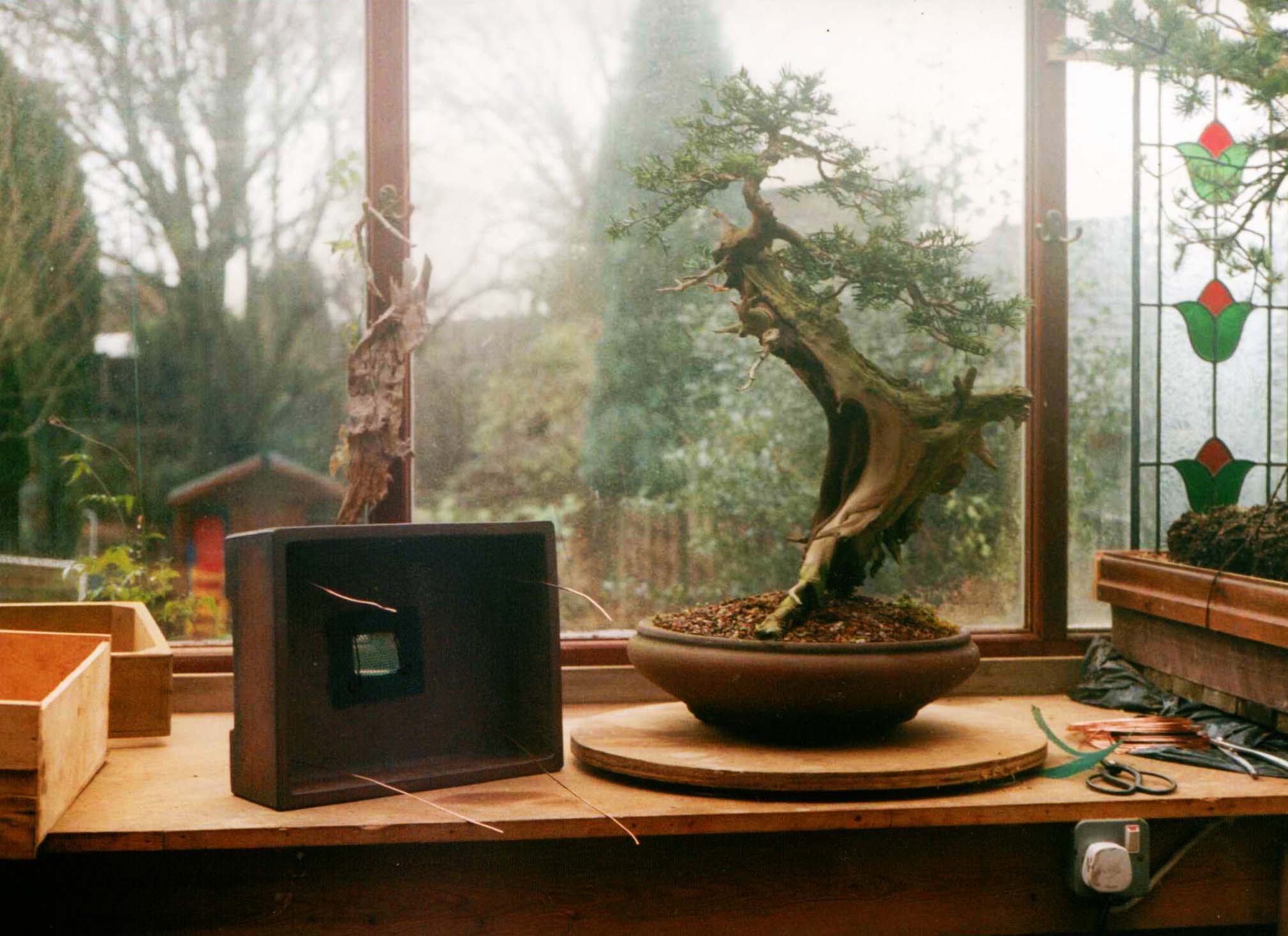
Here are some early photos of the development and crazy pots followed by progress photos of the bending done.

Splitting a Yew root to lower in the pot

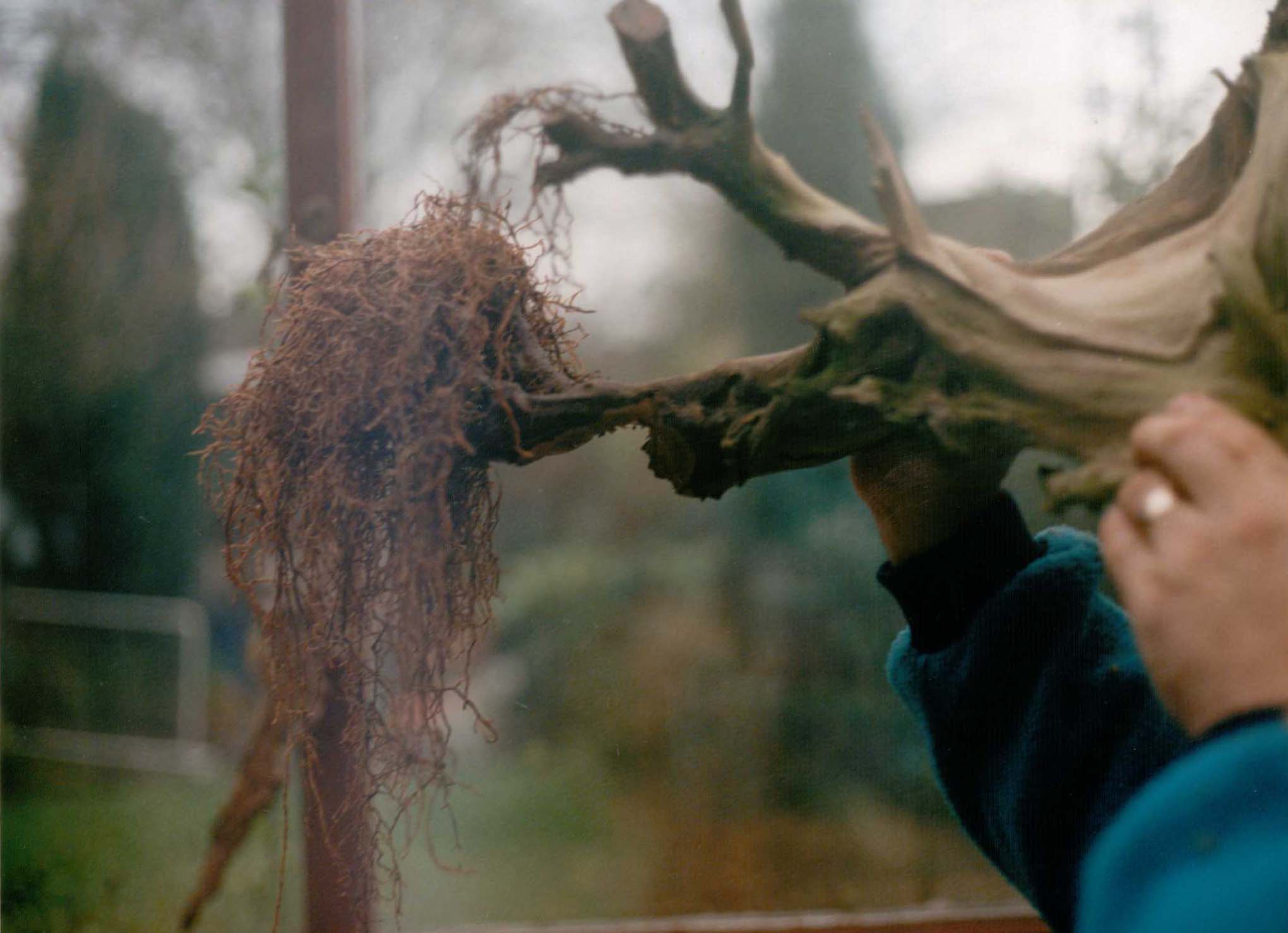
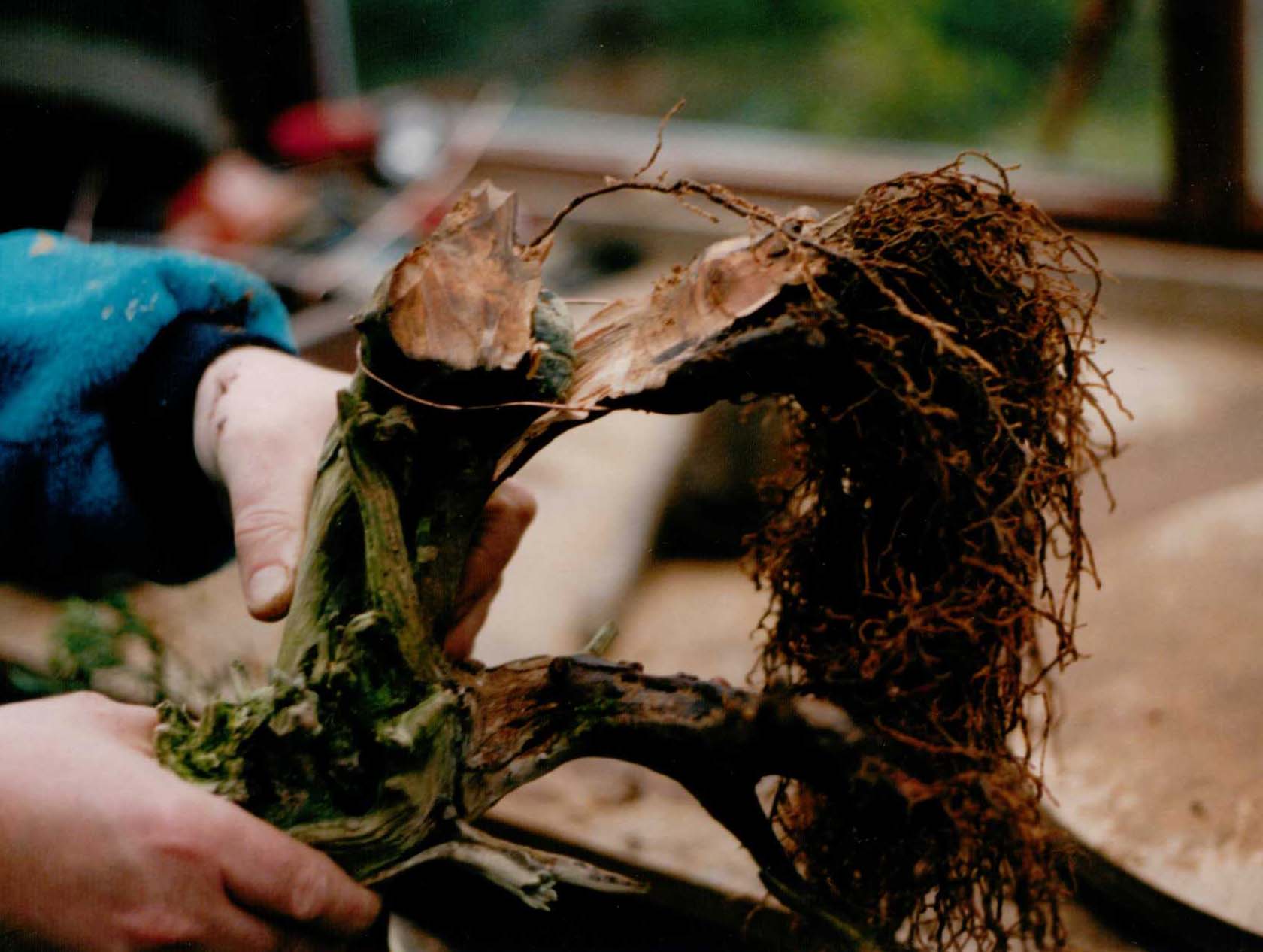
The tree todayIn the early years of the wonderful Yew tree, 1999 to be exact! Yamadori rarely comes with a good root base and this tree was no exception. Imagine a catapult upside down; the roots went in two directions with a large gap between, I needed to lower the tree in the pot; this was not possible without radical work.

I was moving the tree to a beautiful Gordon Duffet pot, perfect in every way for this bonsai.

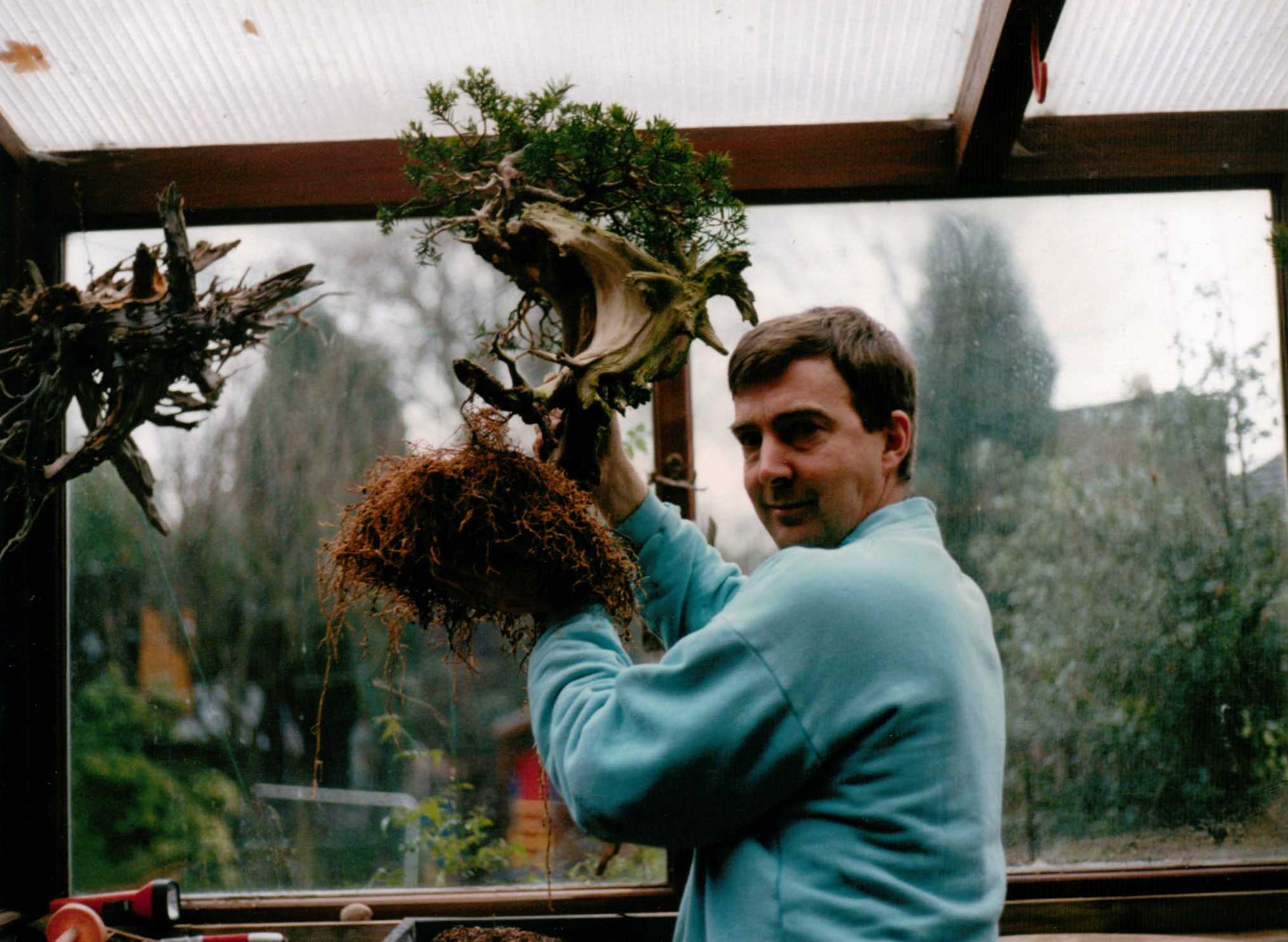
Using a Matika I carved out the bulk of the deadwood at the base of the tree, this enabled me to lower the tree however the live vein still protruded, I needed split the live away from the deadwood. I did this using a large branch splitter and inserting a stone to keep the vein in place. A wire was secured to stop the vein from further splitting and possible folding and snapping off. I remember some of my fellow artists thought I was crazy doing this radical work on such an amazing tree… its common work now… back then in then UK NOT common at all. To get the very best out of your material you must be prepared to do this.

If you look closely at the base of the tree you will see a small stone that I found to mimic a root, the stone has a ‘red’ part that appears to be a root!

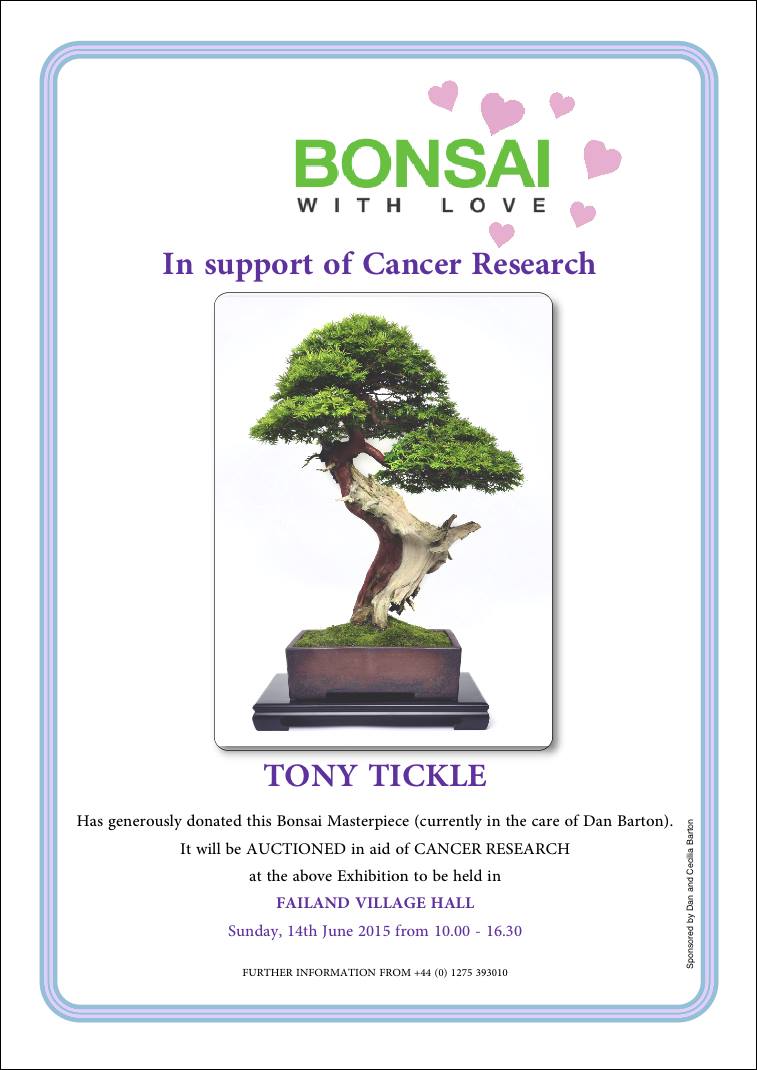
The tree stayed with me for a few years and then I passed on the tree to Dan Barton as it was his favourite, using a graphic of the tree as his ‘Logo’. The tree remained mine but was in his custody. This tree is to be auctioned for Cancer Research next year, so now is your chance to own a piece of my and Dan’s bonsai history!

Yew progress -01

Yew Progress -02Yew Progress -03

yew-porgress-04yew progress 05

auction

Technique explained – Sandblasting a Yamadori Yew Bonsai

I sandblasted my first deadwood way back in 1992 and I guess I have blasted over 50 trees since then, I have perfected the technique of protecting the live veins, foliage and soil so that the aggressive nature of this technique does not upset the wellbeing of the tree.

As will any intervention on a bonsai the tree MUST be in great health. Never work on a tree that is recently collected yamadori or is not in the best health. This tree has grown well over the last three years and the deadwood was desperate to be worked. If I had waited another year the foliage would have restricted the access to in inner part of the tree, this is where the most interesting areas of deadwood are on view.

A few days before I removed an upright trunk and disguised by carving and stripping the cut, this can be seen in the photos as a bright orange area.

The process:

  • Gather the foliage up and bind with fine wire so that you have access to the live vein.
  • Using air-dried modelling clay cover the live veins right to the edge and at least 4mm thick, When dry (about 3 days) cover with Duck tape.
  • Completely cover over the soil and as close to the base of the trunk as possible, I use rubber inner tubes first then bind with commercial cling wrap.
  • Wrap the foliage in an old towel and then cover with a thick plastic bag.

The Blasting:

  • I use a commercial blasting service, you can find these locally via the internet.

The results are simply amazing, the deadwood is clean the splinters are removed from the branches I have snapped and all the detail is revealed. I do not put Lime Sulphur on immediately, as I like the wood to weather slightly prior to application.

First Look: Han Kengai Yew Project

Original Han Kengai YewI collected this Yamadori Yew in 2011, the tree was very slow to establish in the first couple of years, this is due to the cambium layer being very thin because the hard growing conditions that the tree suffered. In the third year the tree thrives and this year the growth has been very strong. With very old trees such as this it’s important that you wait for the growth of the foliage to be robust and vigorous for the future development of the tree, start work too early and you could set back development or worse kill the tree!

The work undertaken this week was to remove the thick upright deadwood branches, clear the smaller dead branches near the base of the tree and reposition the whole into the ‘final’ planting position. The tree will be left for a couple of years to extend and fill out the foliage mass. I will then work on the deadwood and finally sand blast to clean and smooth out some of the rough areas. Then the first styling will take place, another year in the box and finally planting into a training pot. The foliage mass will take at least 10 years to achieve the virtual image… but I can wait if the end result will look something like this.Possible 2020

Potting an old Yamadori Yew to encourage growth

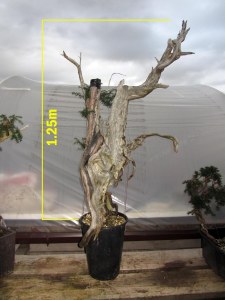
George Yew march 2014George 1This is a very old Yew collected in 2010, it is a tree that I visited on the hill many times before the tree was collected, and one that I took students to as an example of a ‘real’ yamadori in the wild. It was never my intention to collect this tree, as it was very long, it was growing directly in a rock crevice on a cliff face with no foliage close to the base of the tree.
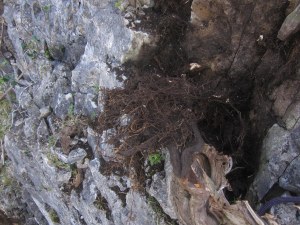
Whilst visiting the tree at the end of April 2010 I noticed that it had fallen from its lofty position and was being held in place by a very small section, the fierce weather that winter had dislodged the rock that was gripping the tree and the whole could at any time fall to the valley below.

tree fallen out of cliffThere was only one course of action, ‘Save the tree’ and this took place the next day. Four friends, two on ropes and one helping with passing tools etc. helped me. The tree came away in less than ten minutes as 95% of it was hanging in mid air… But with little root as most had snapped off in the winter storms, what you see in the photo are dead roots that have been exposed to the weather for many months, you can see where the large rocks have fallen away.

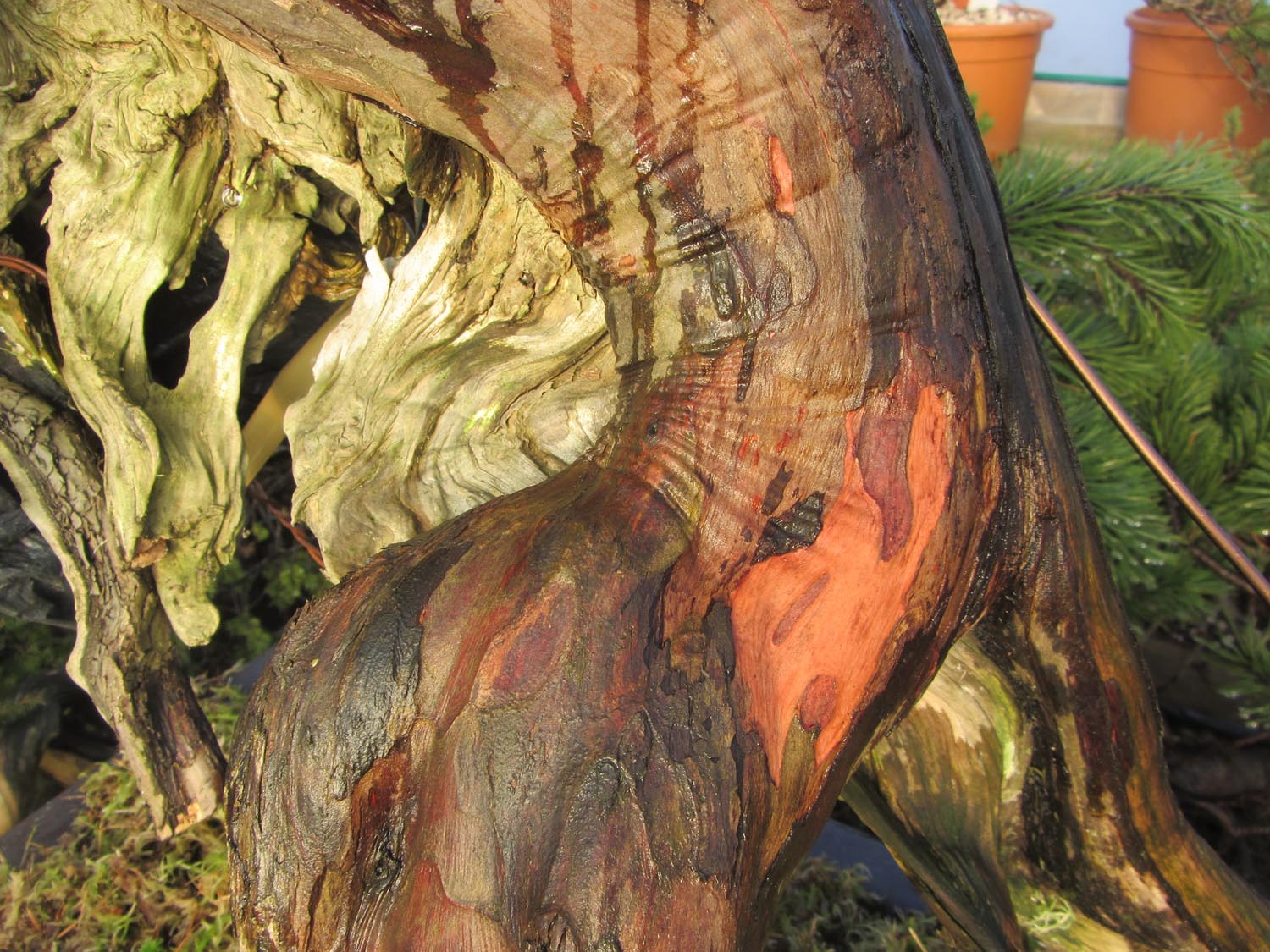
After the second year I removed the top of the tree after encouraging new buds lower down the trunk, this was done by slicing the live vein 2cm above the buds to stop the flow of sap and force it to the weaker buds, this worked remarkably well and will callus over at a later date.

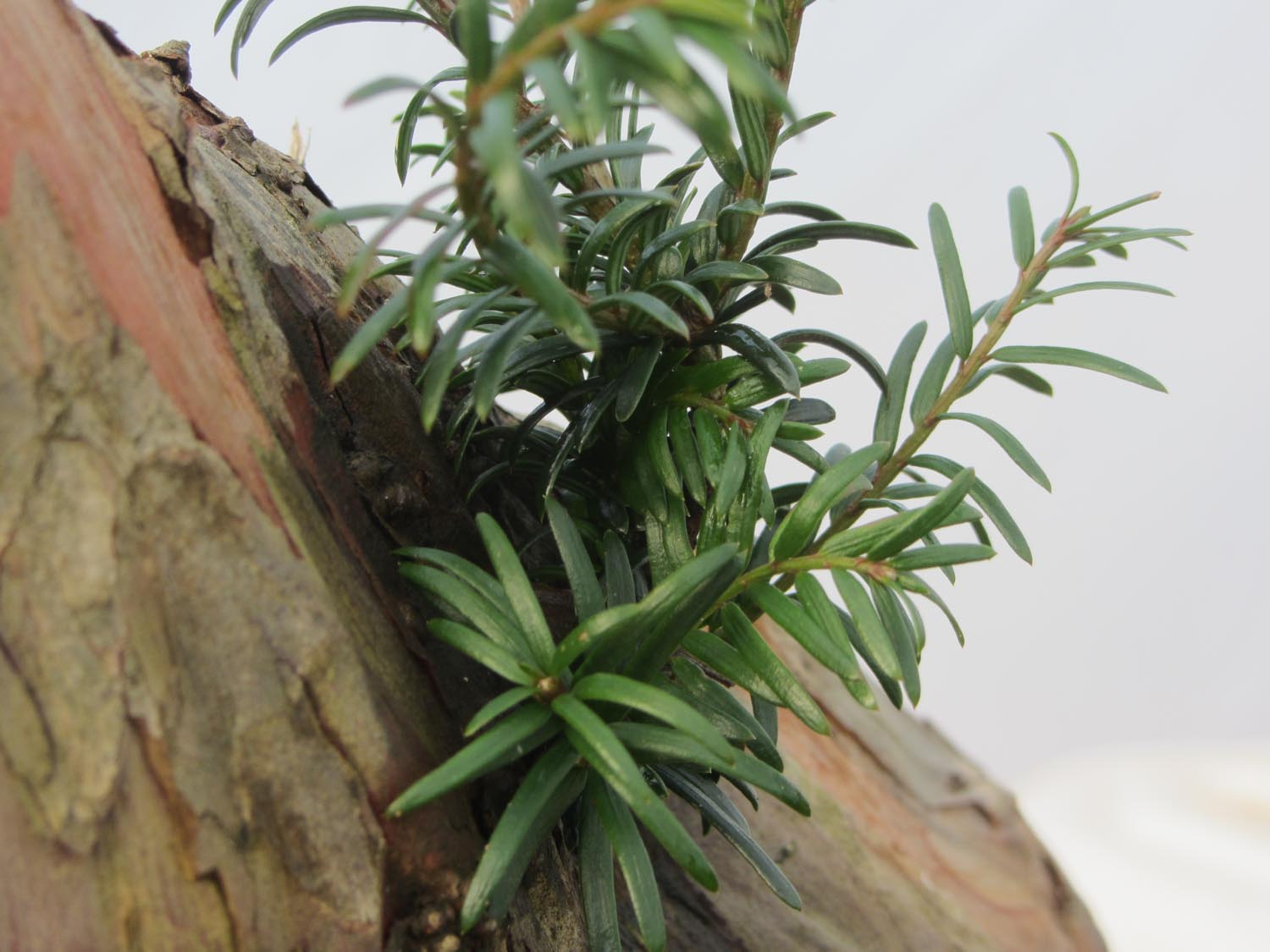
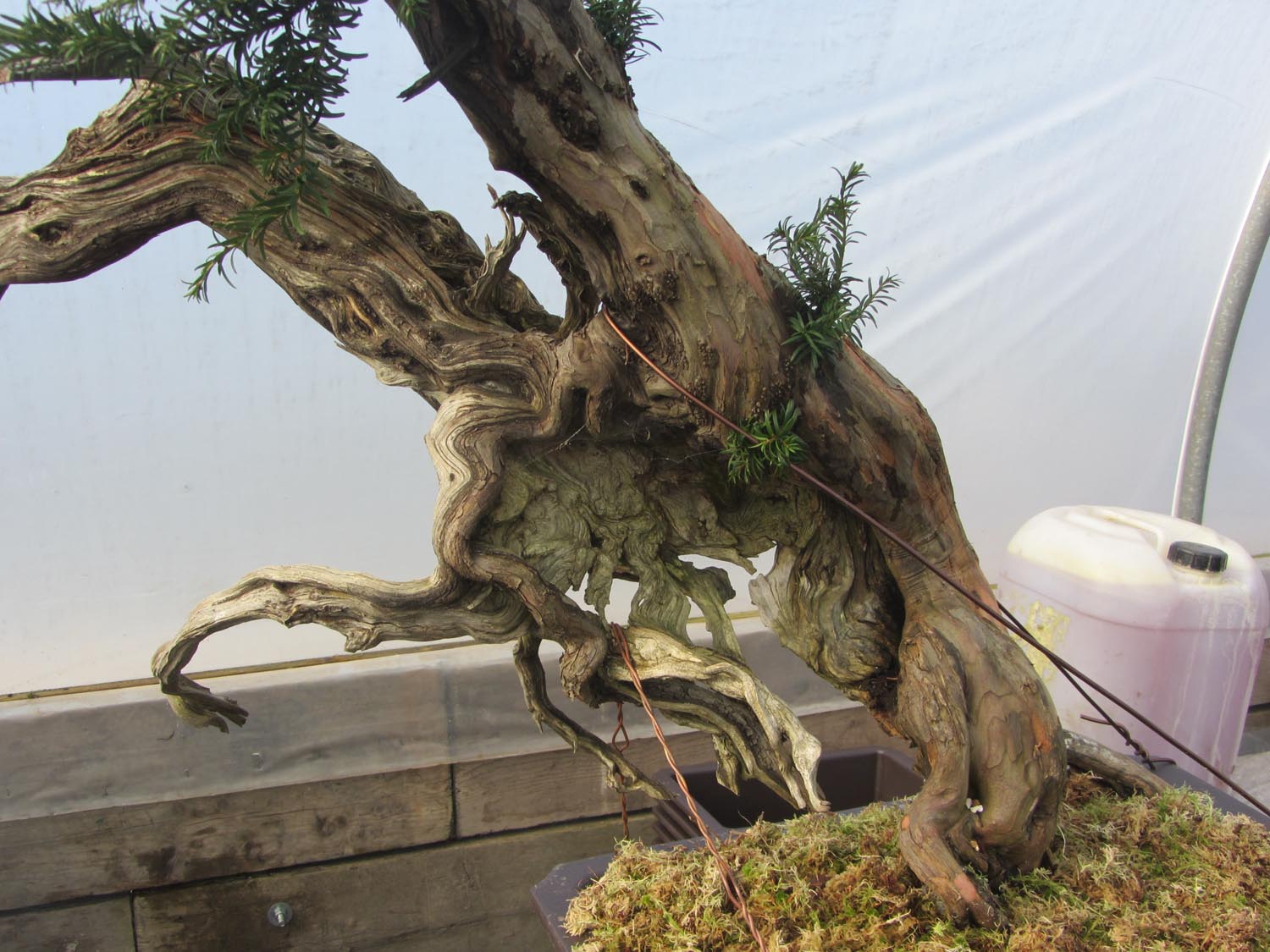
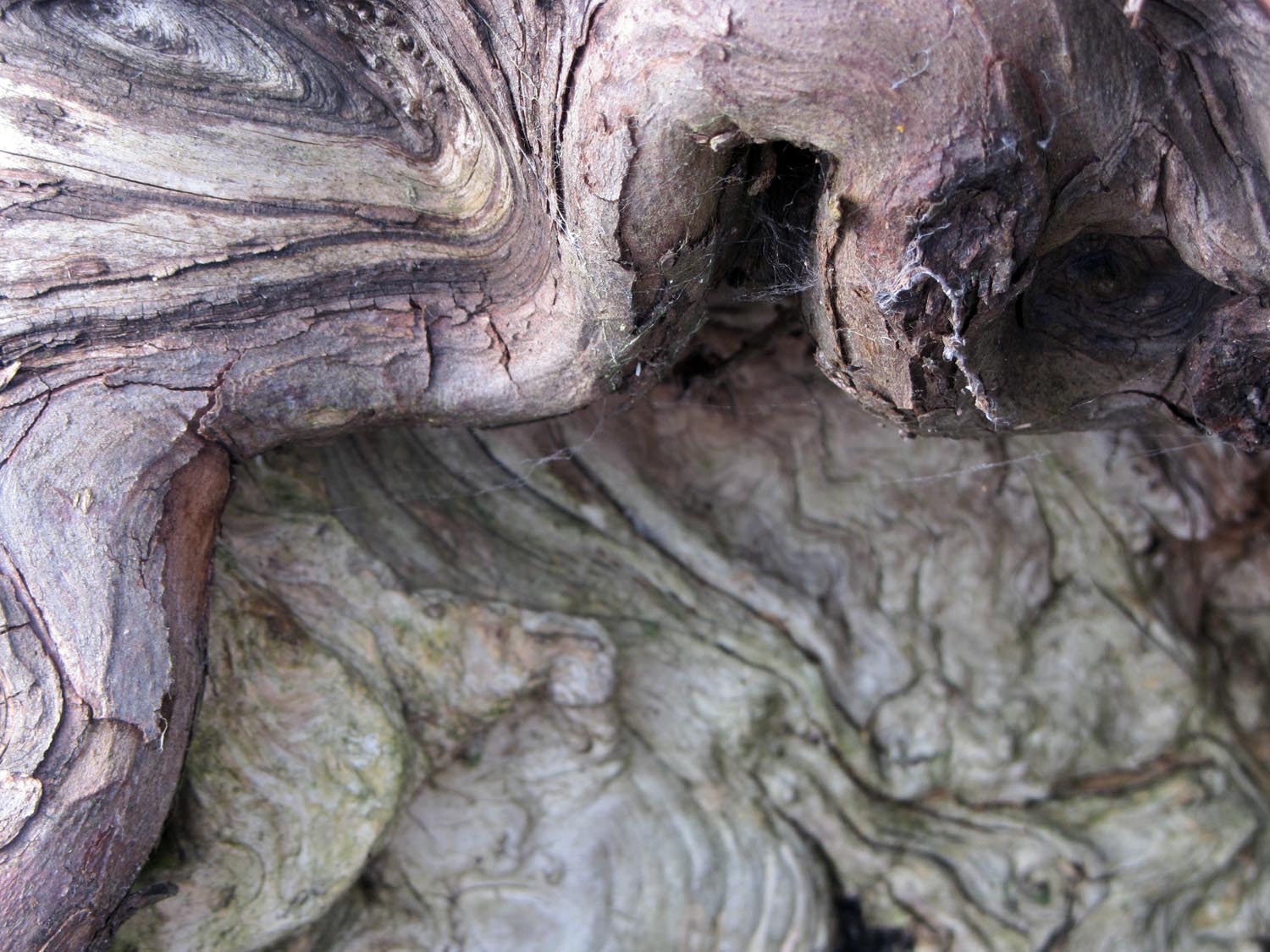
The new grown lower down the trunk is now very strong. I have planted the tree in a much larger container to give free root growth to thicken branches and to place the tree closer to the final design I am after. The potting mix is 60% Pumice 20% Acadama and 20% Kiryu.

Tony with Yew on his Backbig Yew other side

deadwood and thick vein strong new growth new growth deadwood and live vein