Refining the deadwood on the Big Taxus

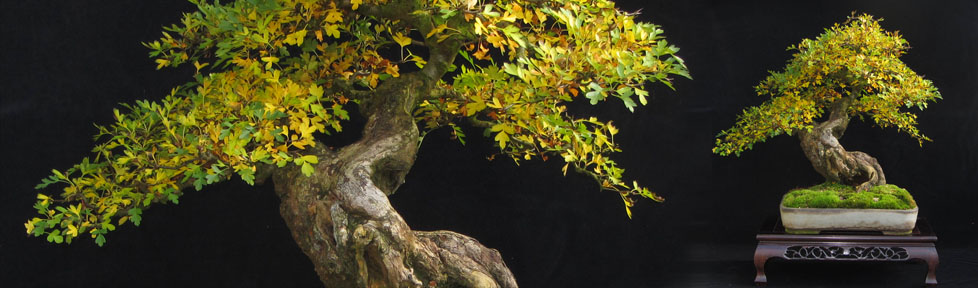
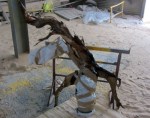
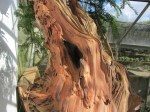
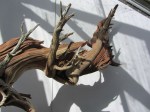
I have been refining the deadwood on my very large Yew. Good preparation, cleaning, removing remnants of old bark, clearing out the deep holes and hiding any work done by man will ensure that this tree will present well. Three years since the tree was collected it has thrived, it will be styled in my garden the day before the Burrs event, Burrs participants who will visit the garden will be the first to see this great Yew.

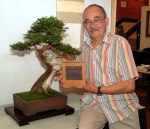
The Yew I gave to my Sensei Dan Barton

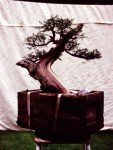
Way back in 1992 over 20 years ago I bought this yew tree off Gordon Duffet, it cost me the two weeks wages and Kevin Willson said I was a brave guy to take on this tree as it did not look very well at all. The tree was positively sick; the needles were yellowing and much of the deadwood rotten. The box was an old beer bottle crate that was held together with a rotting strap… the whole assembly ready to fall apart at any moment. The tree appeared to be planted in garden soil, BUT I could see potential in the tree.

This is a tree much admired by Dan Barton and… at an Event that I held in 2006… I gave the tree on permanent loan to Dan, to be returned to me at some (indeterminate) point in the future. Good trees take time, great trees take years…Here is how the tree looks today.

Cutting the Big Yew to create two trees, including sandblasting

There was always going to be a time when I had to cut the BIG yew into two as the roots were contained in two separate pots. Each pot fed its own foliage, enabling ‘splitting’ the tree.

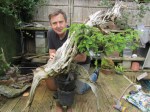
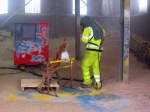
Using an Industrial size reciprocating saw and my friend Terry Foster we cut the tree in two. It took less than 20 minutes… something I waited three years to do and it was completed in such a short time.

This wonderful tree has such amazing deadwood, the challenge I now faced was how to blend the man made cut with the natural deadwood? My work had to be ‘natural’ looking, not ‘carved and sculptured but in sympathy with the tree.

I did not want to ‘overwork’ the cut. I created indents, accentuated holes and smoothed out undulations deliberately leaving a ‘rough’ finish. I used chisels, wedges and split the tree along the grain of the tree. Where the wood became ‘confused’ I ripped and twisted the grain.

After three hours working without Makita’s or Dremmels I was satisfied that I was ready for the next stage. The tree would be ‘naturalised’ with sand blasting. I first sandblasted a tree 20 years ago using a blasting cabinet, that tree was only 75cm tall. This tree is over one metre, far too large to fit in a cabinet!

Close to my nursery is a commercial blasting company, and after covering the pot, foliage and live vein I ventured to them. The work was completed, a weather ‘ancient’ look had been created in less than an hour! The results are great.

Some of the oldest undiscovered Ancient Yew trees In the UK

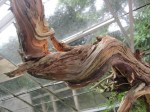
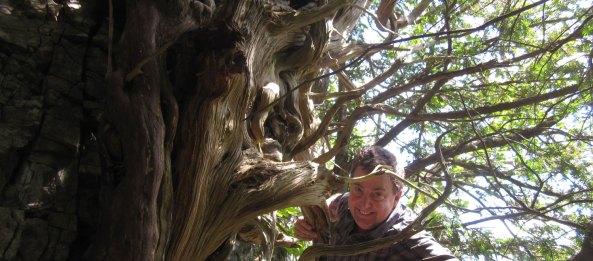
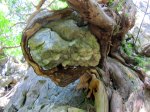
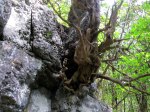
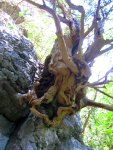
Last summer I found some of the oldest unrecorded Yew trees In the UK. I have check on the registers and they are not listed. These Yew Trees must be very old indeed they grow high on the cliff face deep in a mixed woodland far from any road. The trees are NOT on private land and are accessible to all, if you can find them 🙂  The last photo is the damage done to Yew by winter grazing deer. They strip the bark from the trees as this is the only source of food during the dark winter months. Many trees die, I saw evidence of this throughout the wood.