Using Polystyrene chips when repotting

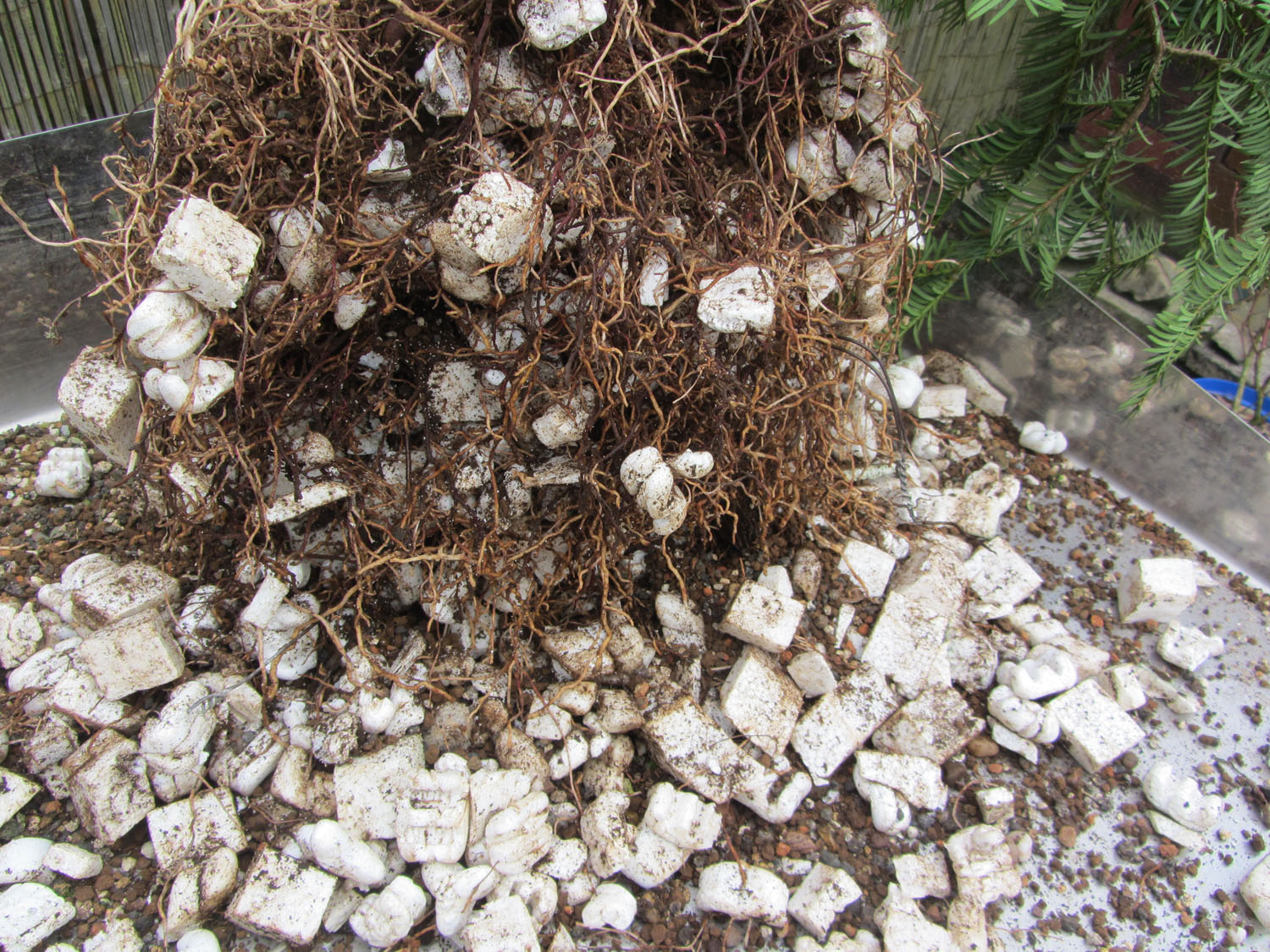
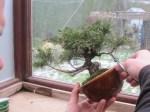
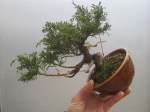
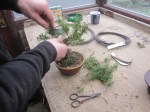
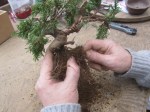
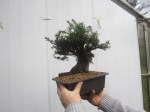
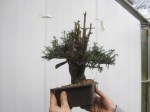
In the second potting of collected material I sometimes use Polystyrene chips in the bottom of the growing on pot. It has three key benefits… In winter the pot stays warmer longer, the roots have free run to grow rapidly and re-potting is a lot easier..and cleaner.

This Taxus has been three years in a feed bucket, it was root trimmed and put back in the same Bucket with new soil and Polystyrene chips in the bottom… as much more growth on the top is required.

I use this technique on Taxus, Prunus and Crateagus. I would NOT recommend Pine and Spruce.


Polystyrene in pots 2
Polystyrene in pots

Polystyrene in pots 3

Bonsai Loud speakers

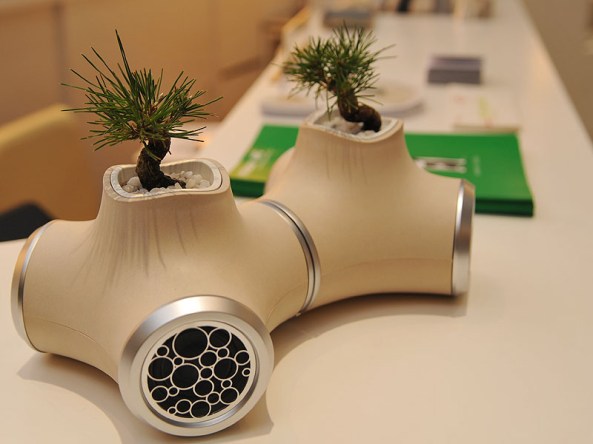
JVC recently unveiled a beautiful line of bonsai-laden Kirikabu speakers at this year’s Tokyo Designer’s Week. Created out of eco-friendly plastic, the conceptual series of speakers can be assembled into different shapes, and each contains a small compartment perfect for planting a tiny bonsai tree!

Each mini modular Kirikabu resembles a tree stump with three horizontal stubs – two of them hold speakers, while the third is a terminal. The fully featured speakers come complete with bass-reflex ports and a sub-woofer. Each stump is made out of “eco-plastic”, which is a bit of a vague term – I’m guessing it’s a plant-based plastic. The units can be connected with one another to create a larger speaker, and each module houses a small pot, where bonsai and other plants can be grown.

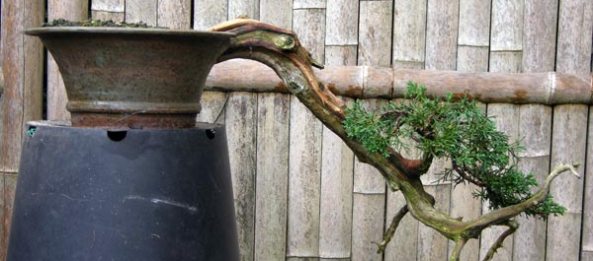
Strange pot for a semi cascade Juniper

I have had this juniper for over ten years, I bought it because I wanted a Japanese Juniper in my collection, this little tree has been the most expensive tree in my garden, because I paid so much for this tree I have been reluctant to part with it, most of my collection consists of yamadori that I have collected.

This tree was originally Moyogi with set branches in a typically imported tree. However the tree suffered from vine weevil about 7 years ago and lost but one branch! It has stood in my garden looking very sorry for all this time…. In fact…many of my bonsai ‘friends’ have made fun of me for paying so much for a runt of a tree.
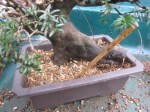
Some times a particular pot can stimulate an idea, this is one such pot. My friend from Holland Hans Van Meer, gave me this pot by William Vlaanderen  because I believed this tree would ‘work’. The idea for this pot is Hans. I think that this runt of a tree will develop into an interesting bonsai… you saw it here first…what do you think?

Creating a Shohin Juniper from mass produced imported material.

Japan, Korea and China produces these small junipers by the thousands, they can be purchased relatively cheaply and in some cases can be transformed into exception bonsai. If you are considering purchasing one, look for compact trees that do not have too many twists and turns and little character… it’s better to have a tree that displays good taper, pleasing movement and healthy branches ready for styling.

One of my students is preparing for the UK heat of the EBA New Talent Competition in 2013 (getting a good start) Mikey is styling as many small Junipers as possible leading up to the event next year. I supplied this little tree for him to work with. Mikey is still very much rough around the edges with his bonsai styling but he does have an excellent eye for detail. He tasked with styling AT LEAST one tree a week (funds permitting) and between styling he is pouring over every Bonsai book in my library.

How to reduce the Yamadori rootball to fit in a Bonsai Pot

When purchasing raw material Yamadori… that is trees that have been collected and are in the first container that they were established, many folk are concerned that the transition to a smaller container would be too traumatic an undertaking.

Timing, health and understanding the resilience of the species is essential when doing this work.
The example shown here is a yew tree that I am developing for David Carvalho from Portugal, the tree has been in its first container for three years and is ready to be moved to a much smaller ‘bonsai pot’ size container.
Checking the roots we see that it pot is full and there is Mycorrhiza present, good evidence of a healthy root system. The establishing planting medium is still very open and there are no ‘black’ roots to be seen.
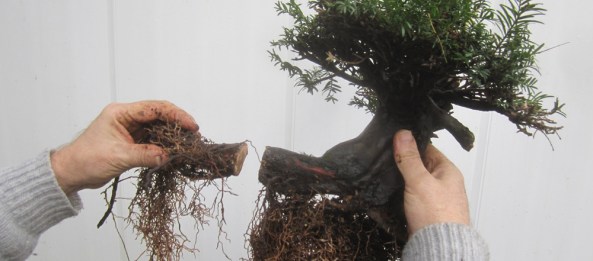
On closer inspection a thick root needs to be shortened to enable the tree to fit into a smaller pot. The abundance of new fleshy root that is present closer to the tree enables me to make a big cut, the top of the root will need to be ‘carved’ to blend in the nebari, this will compliment the deadwood that will feature as part of the overall design.
The root ball is reduced with the fine roots being cut with very sharp sterilised scissors, the tree is tied into the container with wire and filled with my special soil mixture and left to grow for another season before any further work is done.